

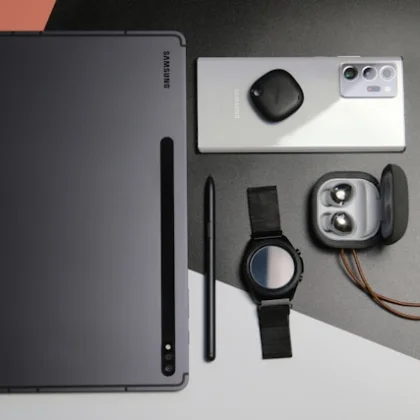


Online Marketplace Kenya 2026: Best Sites to Buy & Sell Used Items

The Complete Guide to Online Marketplaces in Kenya (2026): Where to Buy, Sell & Find the Best Deals
Discover the best online marketplace Kenya options in 2026 — from Jiji Kenya and PigiaMe to Facebook Marketplace and the rising sanaLIST platform. Find out where to sell used items, post free classified ads, and get the best deals online in Kenya today.
Quick Answer: The top online marketplaces in Kenya in 2026 include Jiji Kenya (~150,000 searches/month), OLX Kenya (~120,000 residual searches), PigiaMe (~80,000), Facebook Marketplace Kenya (~60,000), and modern platforms like sanaLIST that combine free classifieds with a structured e-commerce experience. Each platform offers distinct advantages depending on what you're buying or selling.
Introduction: Kenya's Online Marketplace Economy in 2026
Kenya has firmly cemented its position as East Africa's premier digital economy — and nowhere is that more visible than in the explosive growth of its online marketplace sector. From Nairobi apartments listed via smartphone at midnight to second-hand Toyota Harriers sold across counties through classified ads, millions of Kenyans are buying and selling online every single day in 2026.
The data is striking. Searches for online marketplace Kenya now generate an estimated 50,000 queries per month — and that's just one search phrase in a constellation of related keywords that collectively drive hundreds of thousands of monthly searches. Jiji Kenya alone commands roughly 150,000 monthly searches, making it the most-searched classifieds brand in the country. Add OLX Kenya's residual 120,000 searches (despite the platform's closure), PigiaMe's 80,000, Facebook Marketplace Kenya's 60,000, and a raft of broader queries about used items and online shopping — and you're looking at a market with extraordinary digital demand.
Yet Kenya's marketplace landscape in 2026 is not the same as it was even two years ago. Consumer expectations have risen sharply. Buyers demand better search, cleaner listings, faster mobile performance, and greater transaction safety. Sellers want free listing options, wider reach, and tools that help them compete. New platforms like sanaLIST are meeting these demands with structured categories, zero listing fees, and a modern user experience built for Kenya's mobile-first audience.
This guide is your definitive resource for Kenya's online marketplace world in 2026. We review every major platform in depth, compare their strengths and weaknesses, explain what Kenyan buyers and sellers are genuinely looking for, and help you identify where to go — whether you're selling used electronics in Nairobi, searching for affordable furniture in Mombasa, or looking for a second-hand car anywhere in the country.
What Is an Online Marketplace? (And Why Kenya Has Embraced Them)
An online marketplace is a digital platform where multiple sellers list products or services for sale, and buyers discover and purchase them — facilitated through search, structured categories, photos, and direct messaging tools. Unlike a standalone e-commerce store selling a single brand's goods, a marketplace aggregates listings from thousands of individual sellers and, increasingly, small businesses.
In Kenya, the dominant form of online marketplace remains the classified ads platform — a digital notice board where users post listings for free or a modest fee. These differ from retail e-commerce giants like Jumia in several important ways:
- Sellers are primarily individuals, not brands
- Prices are typically negotiable
- Items are often second-hand, used, or pre-owned
- Transactions are usually completed off-platform via M-Pesa, cash, or physical meetup
- No shopping cart or checkout flow — communication happens via call, WhatsApp, or in-platform chat
Kenya's rapid and deep adoption of online marketplaces in 2026 is driven by well-established structural forces. Mobile penetration now covers the majority of the adult population. M-Pesa and its ecosystem of super apps give virtually every Kenyan a usable digital payment identity. Affordable 4G and expanding 5G networks have made browsing and posting listings as frictionless as sending a WhatsApp message. And Kenya's value-conscious consumer culture — a genuine appreciation for quality goods at fair prices — makes second-hand and classifieds markets a mainstream behaviour, not a fringe one.
According to the Kenya National Bureau of Statistics, digital trade and e-commerce are consistently among the fastest-growing sectors in the country's economy, a trend that accelerated through 2024 and shows no sign of reversing in 2026.
The Major Online Marketplaces in Kenya in 2026: A Full Review
1. Jiji Kenya — The Market Leader
Search Volume: ~150,000/month Website: jiji.co.ke Type: Classifieds marketplace
Jiji Kenya is the undisputed giant of Kenyan online classifieds in 2026. Originally a Nigerian platform that expanded aggressively across Africa in the 2010s, Jiji absorbed OLX Kenya's entire operations and built the single largest classifieds audience in the country. Its recognition at Kenya's Digitally Fit Awards as the country's leading e-commerce platform reflects the breadth of its reach — from Nairobi's tech-savvy urban buyers to upcountry sellers listing farm equipment and motorcycles.
What Jiji Does Well in 2026:
- The deepest inventory across all categories — cars, phones, electronics, furniture, real estate, jobs, and services
- Improved fraud detection and listing moderation compared to previous years
- A continuously refined mobile app with fast-loading listings
- Paid promotion tools (Top Ads, Urgent labels) for sellers who want faster results
- A large and active seller community that creates genuine liquidity in most categories
Where Jiji Falls Short:
- Still no structured buyer protection or in-platform payment escrow
- Transactions remain entirely informal — safety depends on individual caution
- Listing fees and boost costs have risen, frustrating casual sellers
- Customer support response times remain inconsistent
Best For: Serious sellers with multiple listings or high-value items; buyers looking for the widest possible selection across all categories.
2. OLX Kenya — The Brand That Outlived Its Platform
Search Volume: ~120,000/month Status: Defunct — operations absorbed by Jiji Kenya
One of the more remarkable phenomena in Kenya's 2026 digital landscape is that OLX Kenya — a platform that no longer independently operates — continues to generate approximately 120,000 monthly searches. The brand shut down its Kenyan operations years ago and transferred its user base to Jiji, yet over a hundred thousand Kenyans still search for it monthly, largely out of habit and nostalgia for a platform they once used daily.
This persistent search volume is commercially significant. It represents a large, ready-to-transact audience that is actively looking for an online marketplace experience but has not yet found a comfortable long-term home on any single alternative platform. They know they want to buy or sell; they just haven't decided where.
For those users, sanaLIST is one of the most compelling OLX alternatives currently operating in Kenya. It offers free listings across a wide range of categories, a clean browsing interface, and a growing seller and buyer community — providing the familiar classifieds feel of OLX with a more modern, structured experience built for 2026.
3. PigiaMe Kenya — The Local Specialist
Search Volume: ~80,000/month Website: pigiame.co.ke Type: Classifieds with real estate specialisation
PigiaMe is a proudly Kenyan platform that has maintained a loyal user base by focusing on what it does best: property listings, used household goods, and everyday classifieds. In 2026, it remains a go-to for anyone looking for rental housing in Nairobi, Mombasa, Kisumu, Nakuru, or Eldoret, offering more granular location filters than many competing platforms.
PigiaMe's Strengths in 2026:

- Deep, well-maintained real estate and rental property listings
- Strong brand trust built over years of local operation
- Effective for household appliances, furniture, and vehicles
- Local team with genuine understanding of the Kenyan buyer's priorities
PigiaMe's Ongoing Weaknesses:
- Smaller overall audience than Jiji, meaning slower time-to-sale for non-property categories
- User interface lags behind newer platforms in mobile responsiveness
- Less investment in app development relative to competitors
Best For: Anyone searching for houses to rent, apartments to let, or property to buy in Kenya's major urban centres, as well as used household goods.
4. Facebook Marketplace Kenya — The Social Commerce Powerhouse
Search Volume: ~60,000/month Platform: facebook.com/marketplace Type: Social commerce / peer-to-peer
Facebook Marketplace has evolved from an informal side feature to a fully embedded commerce channel for millions of Kenyans in 2026. Its power comes not from technology but from network effects: because nearly every Kenyan adult has a Facebook account, the platform's seller and buyer pool is enormous — and social trust (mutual friends, community group membership, visible profiles) partially substitutes for the formal trust mechanisms that dedicated marketplaces lack.
Facebook buy-and-sell groups — hyperlocal communities like "Nairobi Buy & Sell," "Mombasa Second Hand Market," "Kisumu Electronics & Phones," and hundreds of others — function as extremely active informal marketplaces, generating thousands of transactions daily with no platform fees at all.
Why Facebook Marketplace Works in Kenya in 2026:
- No additional sign-up — Facebook penetration among Kenyan adults is near-universal
- Social graph creates partial trust (visible profiles, mutual friends, group reputation)
- WhatsApp Business integration makes seller-buyer communication seamless
- Zero listing fees, zero commission — entirely free to use
- Community buy-sell groups add locality and social accountability
Facebook Marketplace's Persistent Limitations:
- Scam risk is meaningfully higher than dedicated classifieds platforms
- No structured dispute resolution or transaction protection
- Listing organisation is chaotic — no taxonomy, inconsistent categorisation
- Facebook's core UX is not built around commerce and can feel clunky for serious transactions
Best For: Casual sellers offloading single items quickly, buyers hunting deals in hyperlocal community groups, and anyone already spending significant time in Facebook buy-sell communities.
5. sanaLIST Kenya — The Modern Free Marketplace
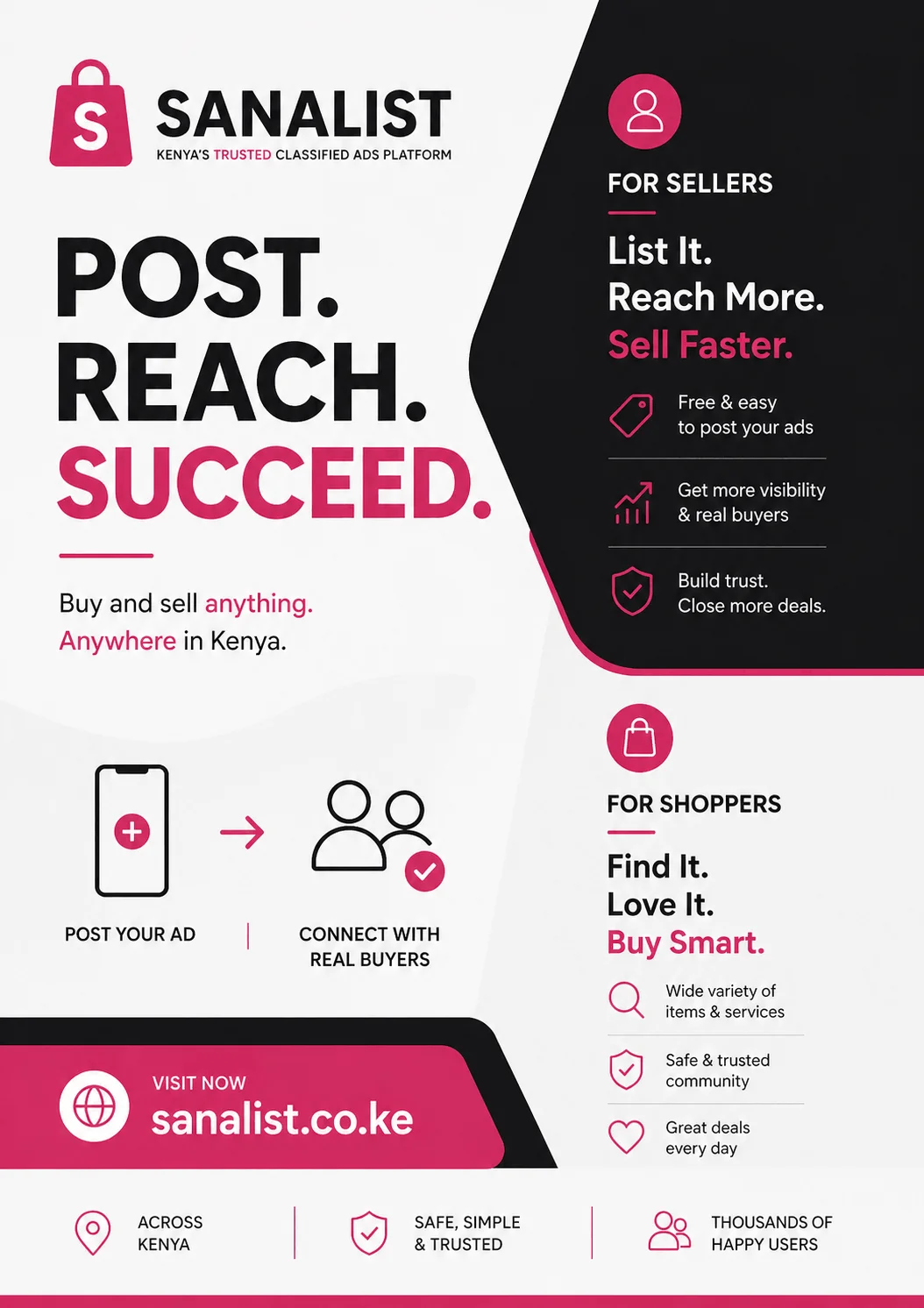
Website: sanalist.co.ke Type: Free classifieds and structured online marketplace Listing Cost: Free
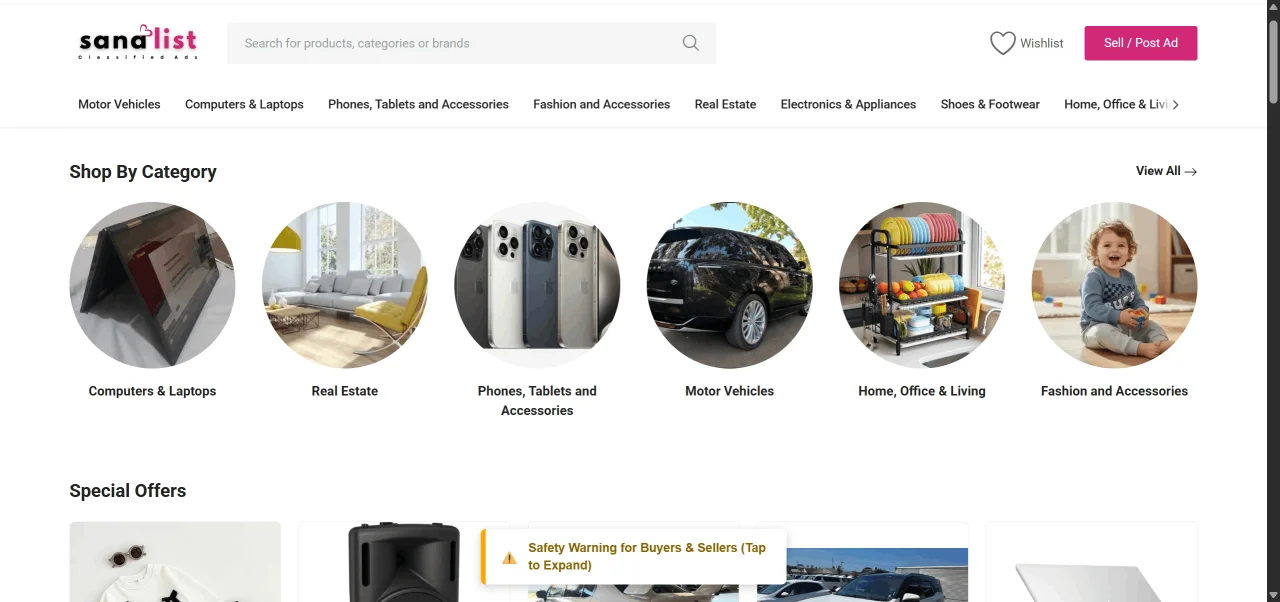
sanaLIST is one of Kenya's most noteworthy online marketplace platforms in 2026, and one that is particularly well-positioned to capture the large audience currently searching for OLX alternatives and general online marketplace options. It positions itself as Kenya's #1 Free Classifieds & Online Marketplace — and its category structure backs that ambition with genuine depth.
What distinguishes sanaLIST from older classifieds platforms is the quality of its category architecture. Where many platforms dump all listings into a few broad buckets, sanaLIST provides deeply structured subcategories that make browsing genuinely efficient. This is good for users and excellent for SEO — meaning listings on sanaLIST have a better chance of being discovered not just through the platform's internal search, but through Google searches too.
Exploring sanaLIST's Key Categories:
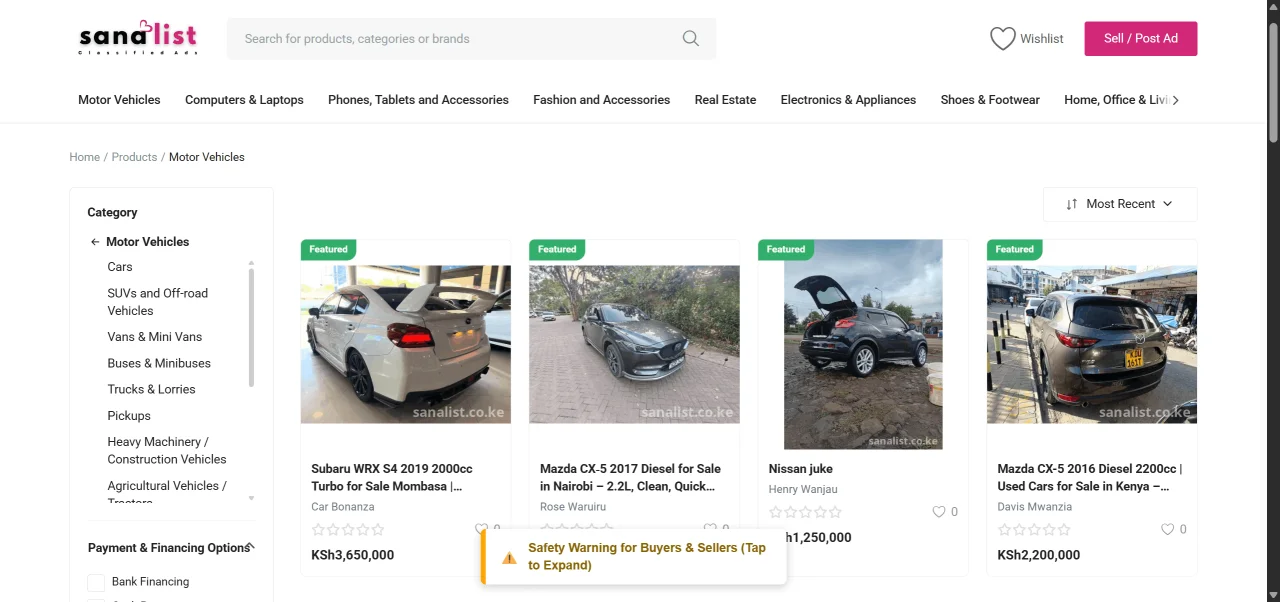
Motor Vehicles — sanaLIST's motor vehicles section is comprehensive. Browse cars by specific make — Toyota, Nissan, Honda, Mazda, Subaru, or Mitsubishi. Find motorcycles, trucks and lorries, buses and minibuses, pickups, and SUVs and off-road vehicles. There are also dedicated sections for vehicle parts and accessories, car hire and vehicle rental, and car repair and mechanic services.
Computers and Laptops — The computers and laptops section covers laptops by brand (HP, Dell, Lenovo, Asus, Acer, MacBook), gaming laptops, business and professional laptops, refurbished and used laptops, desktop computers, monitors and displays, and storage and memory components.
Phones, Tablets and Accessories — The phones and tablets section includes smartphones by Samsung, Apple, Tecno, Infinix, Honor, and Motorola, tablets and eReaders including iPad and Kindle, chargers, power banks and cables, headphones and speakers, and refurbished and certified pre-owned phones.
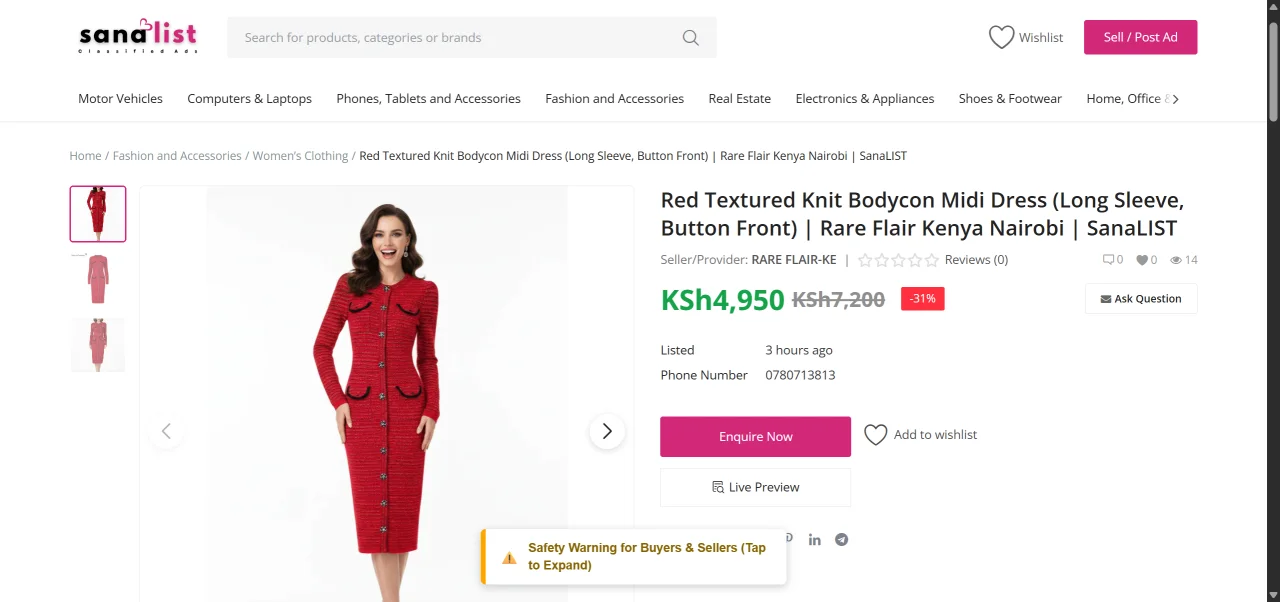
Fashion and Accessories — The fashion section is unusually well-developed for a classifieds platform, covering women's clothing, men's clothing, kids and baby clothing, bags and handbags, watches, jewellery and accessories, sunglasses and eyewear, and even bridal and occasion wear.
Real Estate — The real estate section allows buyers, renters, and property owners to list and browse housing across Kenya's major towns and cities.
For anyone who is frustrated by Jiji's rising listing costs, put off by Facebook Marketplace's disorganisation, or still mourning OLX's departure, sanaLIST is the most structurally sound free alternative operating in Kenya in 2026. Register and post your first free ad in minutes.
Used Items in Kenya in 2026: What Buyers Are Searching For
The search query "used items in Kenya" attracts approximately 40,000 monthly searches — representing buyers who are price-conscious, value-oriented, and actively ready to transact. Understanding this audience's preferences reveals the commercial heartbeat of Kenya's classifieds economy.
The Most In-Demand Used Item Categories
Used Cars and Vehicles Kenya's second-hand car market in 2026 remains one of Africa's most active. Japanese imports — particularly Toyotas, Subarus, Nissans, and Hondas — dominate classifieds at all price points. The availability of affordable Japanese auction imports through bond dealers has made relatively new, reliable vehicles accessible to middle-income Kenyans, but the used market for older vehicles is equally robust. Browse cars on sanaLIST or explore vehicle parts and accessories for maintenance-related purchases.
Used Smartphones and Electronics Smartphone upgrade cycles in Kenya average 18 to 24 months, generating a constant flow of lightly used devices into the second-hand market. Mid-range Samsung Galaxy models, Tecno Phantom and Spark series devices, and the perpetually popular iPhone (usually 1-2 generations behind the latest) are the highest-volume used phone categories. The refurbished and certified pre-owned phones category on sanaLIST serves buyers who want documented condition at a lower price.
Refurbished Laptops The demand for affordable computing among Kenya's students, freelancers, and SME workers has made refurbished laptops one of the highest-volume classifieds categories in 2026. Dell Latitude, HP EliteBook, and Lenovo ThinkPad business-grade models — imported as corporate off-lease stock — are consistently the most popular, offering enterprise build quality at accessible prices.
Used Furniture and Home Appliances Nairobi's relentless residential mobility — professionals relocating for work, young families upgrading from bedsitters to apartments, expatriates leaving the country — generates a constant stream of good-quality used furniture and appliances. Fridges, washing machines, sofas, dining sets, and gas cookers all sell actively in online classifieds.
Mitumba Fashion (Second-Hand Clothing) Kenya's mitumba sector — second-hand clothing sourced primarily from Western donations — remains a multi-billion shilling economy in 2026, and an increasing share of it is moving online. Direct seller-to-buyer fashion classifieds are growing, particularly for curated or branded pieces that command a premium over the Gikomba street market experience. The fashion section on sanaLIST caters to this rising digital fashion trade.
Agricultural Equipment Given Kenya's agricultural economic backbone, demand for used tractors, water pumps, irrigation equipment, and farm tools is substantial and growing in digital classifieds, particularly on platforms with dedicated agricultural subcategories.
How to Sell Successfully on Kenya's Online Marketplaces in 2026

Whether you're listing on Jiji, sanaLIST, or Facebook Marketplace, the fundamentals of a high-performing classified listing have solidified into a clear framework by 2026. Here is what actually works:
Step 1: Match Your Item to the Right Platform
Platform-item fit matters enormously for time-to-sale. A rough guide:
- Cars, motorcycles, trucks → sanaLIST motor vehicles, Jiji, PigiaMe
- Phones and electronics → sanaLIST smartphones, Jiji
- Laptops and computers → sanaLIST computers, Jiji
- Real estate and rentals → sanaLIST real estate, PigiaMe, Jiji
- Fashion and clothing → sanaLIST fashion, Facebook Marketplace
- Casual single items → Facebook Marketplace, community buy-sell groups
- Multiple listings / side business → sanaLIST for free unlimited ads
Step 2: Photography Is Your First Sales Tool
In 2026, Kenyan online buyers are visually sophisticated. A blurry, poorly-lit listing photo signals either carelessness or something to hide, and both interpretations lead the buyer to scroll past. Use natural daylight or a well-lit indoor setting, photograph from multiple angles, include the item's serial number or packaging where relevant, and — critically — photograph any defects honestly. Transparency about flaws builds trust and dramatically reduces post-sale disputes.
Step 3: Write Listings That Rank and Sell
Your listing title and description serve two masters: platform search algorithms and human buyers. The title should include the brand, model, condition, location, and price indication. The description should add specifications, usage history, reason for selling, and preferred payment method.
A well-optimised listing title in 2026: "Samsung Galaxy S23 – 256GB – Phantom Black – Used 8 Months – Nairobi CBD – Ksh 52,000 Negotiable"
A poorly-optimised title: "Phone for sale – good price"
The difference in response rates between these two listings is enormous.
Step 4: Price With the Market, Not Against It
Before setting your price, search for identical or similar items on at least two platforms. Price your listing 10 to 15 percent above your walk-away minimum to leave negotiating room without pricing yourself out of serious inquiries. Items priced significantly above market simply don't sell in a transparent, comparison-friendly online marketplace environment.
Step 5: Respond Within Minutes, Not Hours
The online buying window is short. Most serious buyers contact multiple sellers simultaneously and commit to whoever responds first with clear, confident information. Enable push notifications, keep your phone accessible, and treat marketplace inquiries with the same urgency as a business call.
Step 6: Conduct Transactions Safely
For any item above Ksh 5,000, meet in a public location: a bank branch lobby, a police station compound, or the ground floor of a busy shopping mall are all popular and safe choices among experienced Kenyan classifieds traders. Verify M-Pesa payment confirmation directly in the Safaricom app — never trust screenshots sent over WhatsApp, as these are trivially easy to fake. Never release goods or hand over keys before payment is confirmed in your own phone.
Buyer Safety Guide: Avoiding Scams on Kenyan Online Marketplaces in 2026
Kenya's classifieds platforms have matured considerably, but fraud remains a real and active threat in 2026. Here are the most common scams and practical defences against each.
The Overpayment Scam
A fake buyer contacts you, sends a doctored M-Pesa confirmation screenshot showing payment in
excess of your asking price, and requests the difference refunded before collecting. Rule: never send money to a buyer, under any circumstance, ever.
The Fake Listing / Photo Theft Scam
Scammers post photos of items they do not own — downloaded from Google Images, manufacturer websites, or other listings — collect a deposit or reservation fee, then vanish. Defence: use Google Lens (available free on any Android phone) to reverse-image-search listing photos. Original photos taken by the real seller won't appear on other websites. Stolen images will.
The Impossible Bargain Scam
A brand-new iPhone 16 at Ksh 18,000. A Toyota Land Cruiser V8 at Ksh 1.2 million. Dramatic underpricing is almost always a scam indicator. Research realistic market prices across multiple platforms before assuming any deal is legitimate.
The Proxy Agent Scam
The seller claims to be abroad, upcountry, or otherwise unavailable for an in-person meeting, and offers to send an "agent" to collect payment. This is a near-universal fraud signal. Legitimate sellers of high-value items can and do meet buyers in person. Insist on it.
Fake Property Listings
Rental and property scams are among the most financially damaging in Kenya's online marketplace. Fraudulent landlords list non-existent or already-tenanted properties, collect multiple deposits from different applicants, and disappear. Never pay any amount — deposit, holding fee, or agent commission — without physically visiting the property and meeting the actual owner or a licensed agent with verifiable credentials.
The Communications Authority of Kenya offers consumer guidance on digital fraud and online marketplace safety, and is worth bookmarking for reference.
Online Marketplace Kenya 2026: Platform Comparison
| Platform | Free Listings | Mobile Optimised | Buyer Protection | Best Use Case |
|---|---|---|---|---|
| Jiji Kenya | Partial (paid boosts cost more) | Yes (dedicated app) | None | High-traffic, all categories |
| PigiaMe | Yes | Partial | None | Real estate and rentals |
| Facebook Marketplace | Yes | Yes (within Facebook app) | None | Casual, social, hyperlocal |
| sanaLIST | Yes — all listings free | Yes (mobile-friendly) | None | Free multi-category classifieds |
The column that reads "None" uniformly across buyer protection is the most telling feature of Kenya's 2026 marketplace landscape. Structured buyer protection — escrow payments, verified seller programmes, dispute resolution — remains essentially absent from every major Kenyan classifieds platform. The first platform to credibly solve this problem will have a decisive competitive advantage.
The Future of Online Marketplaces in Kenya: What to Expect Beyond 2026
Kenya's marketplace sector is at a genuine inflection point. Several trends are shaping the next phase of growth:
Mobile-First Will Deepen Further
With over 95% of Kenyan internet access happening via mobile devices, platform speed, data efficiency, and touch-optimised UX are not nice-to-haves — they are existential requirements. Platforms that remain desktop-first or that load slowly on 3G connections will lose users to lighter, faster alternatives.
M-Pesa Integration Will Define the Winners
In-app payment processing, linked to M-Pesa's vast network, is the single most transformative product development opportunity available to Kenyan marketplace operators. A platform that enables verified payment, holds funds in escrow until delivery is confirmed, and resolves disputes programmatically will fundamentally change the trust economics of online commerce in Kenya. Expect this to arrive in some form from a major platform within the next 18 months.
Video Listings Are Coming
Short-form video has transformed e-commerce globally. Expect Kenyan classifieds platforms to begin supporting video listings — particularly for high-value items like cars, furniture, and electronics — where a 60-second walkthrough communicates far more than ten static photographs.
AI-Powered Discovery
As listing volumes on all platforms grow, manual browsing becomes increasingly inefficient. AI-powered recommendation engines — "You viewed a Subaru Forester; here are similar listings within your budget in Nairobi" — will become a key differentiator. Platforms with clean structured data (like sanaLIST's category taxonomy) are better positioned to deploy these tools effectively than platforms with chaotic, unstructured listings.
Niche Vertical Platforms Will Emerge
Kenya's market is now large enough to support specialist marketplaces with deep expertise in single verticals — dedicated car marketplaces with vehicle history checks, dedicated property platforms with legal due diligence tools, dedicated fashion resale platforms with authentication services. General classifieds will increasingly coexist with, rather than compete against, these vertical specialists.
Frequently Asked Questions About Online Marketplaces in Kenya (2026)
What is the best online marketplace in Kenya in 2026?

Jiji Kenya leads in raw traffic and listing volume. However, for free unlimited listings with structured categories and a modern mobile browsing experience, sanaLIST is the most compelling free alternative available in 2026 — particularly for sellers who want maximum category visibility without paying for boosts.
Is OLX still working in Kenya?
No. OLX Kenya is no longer operational. Its user base was absorbed by Jiji Kenya when OLX exited the market. The brand still receives approximately 120,000 monthly searches from Kenyans who remember it, but there is no active OLX platform in Kenya in 2026. Former OLX users should explore sanaLIST or Jiji as direct alternatives.
How do I sell used items online in Kenya safely in 2026?
Post your listing on a reputable platform like sanaLIST, include clear multi-angle photos and an honest description, price competitively, respond quickly to inquiries, and always meet buyers in a well-lit public location for high-value transactions. Verify all M-Pesa payments directly in the Safaricom app before handing over any item.
What is the safest way to buy used goods online in Kenya?
Research the item's realistic market price across multiple platforms, reverse-image-search all listing photos using Google Lens, communicate with the seller before committing to verify they are genuine, and insist on a physical meetup for any transaction above Ksh 5,000. Never pay deposits or reservation fees to unverified sellers.
Can I list the same item on multiple Kenyan marketplaces simultaneously?
Yes — and doing so is highly recommended. Posting the same listing on sanaLIST, Jiji, and a relevant Facebook Marketplace group simultaneously maximises your reach and speeds up time-to-sale significantly. Remove all listings promptly once your item sells to avoid time-wasting inquiries.
Which online marketplace is best for selling cars in Kenya in 2026?
Jiji Kenya and sanaLIST's motor vehicles section are both strong choices. For maximum exposure, list on both platforms simultaneously. Include comprehensive specifications, service history, year of manufacture, mileage, and photos from all angles including the engine bay, interior, and any bodywork imperfections.
Which platform is best for renting or buying property in Kenya?
PigiaMe and sanaLIST's real estate section are both solid options for property in 2026, with PigiaMe having particular depth in rental listings for Nairobi. Cross-posting on both platforms and Facebook property groups gives maximum visibility.
What sells fastest on Kenyan online marketplaces?
Mid-range Android smartphones (Samsung, Tecno, Infinix), refurbished business laptops (HP, Dell, Lenovo), kitchen appliances (fridges, gas cookers, microwaves), fashionable clothing in good condition, and competitively-priced used cars consistently achieve the fastest sale times. Niche, highly specialised, or unusual items take longer to find the right buyer but can command better margins when they do.
Conclusion: Navigating Kenya's Online Marketplace Landscape in 2026
Kenya's online marketplace ecosystem in 2026 is the most developed, most competitive, and most buyer-friendly it has ever been. Whether you are a side-hustle seller flipping used electronics for extra income, a small business owner building an online presence, a first-time buyer hunting for an affordable second-hand car, or a landlord listing a property to let, there are more good options available to you today than at any previous point.
The landscape in summary: Jiji Kenya leads in traffic but commands higher costs for visibility. OLX Kenya's ghost traffic reveals a large underserved audience. PigiaMe holds its niche in real estate. Facebook Marketplace thrives on social trust and zero friction. And sanaLIST is building a genuinely structured, free-to-use alternative with category depth that spans motor vehicles, laptops and computers, smartphones and tablets, fashion, and real estate — all at zero listing cost.
The smartest buyers in 2026 search across multiple platforms to find the best price and the most credible seller. The smartest sellers list across multiple platforms to maximise reach. And the smartest operators invest in the safety, speed, and mobile experience that Kenya's online buyers increasingly demand.
Start browsing or listing today at sanalist.co.ke — Kenya's free online marketplace, built for the way Kenyans buy and sell in 2026.
For more tips, guides, and insights on buying and selling in Kenya, visit the sanaLIST blog.
Useful External Resources:
- Communications Authority of Kenya — Consumer Safety
- Kenya National Bureau of Statistics — Digital Economy
- Safaricom M-Pesa — Payment Fraud Prevention
- Competition Authority of Kenya — Consumer Rights
Published: May 2026. This article is reviewed and updated regularly to reflect current changes in Kenya's online marketplace landscape.