

Mazda 3 Price in Kenya 2026 | Specs, Import Duty & Review
Quick Answer
In This Guide
What the Mazda 3 Is, and Why Kenyans Keep Buying It
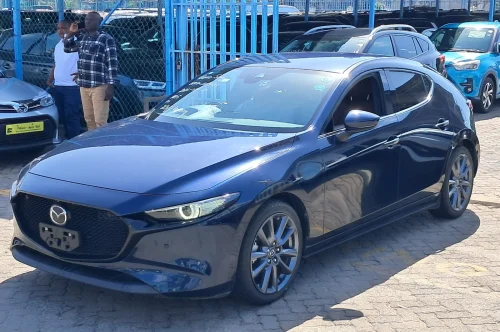
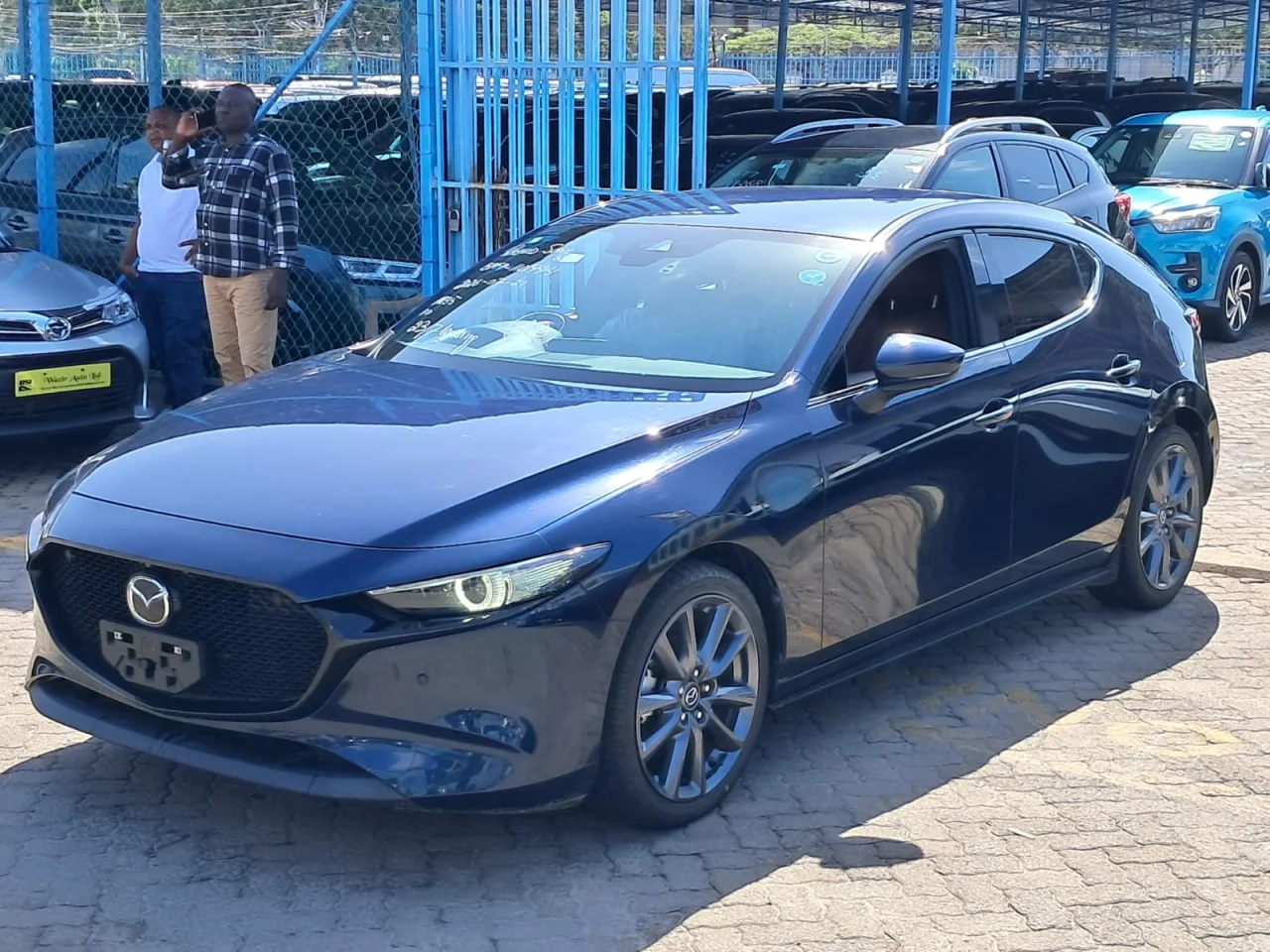
The Mazda 3 is a compact car sold as a five-door hatchback and a four-door sedan, and it has quietly become one of the most cross-shopped cars for sale in Kenya in the 1.5–2.5 litre segment. In Japan and in the auction sheets that most Kenyan importers work from, the same car is badged the Mazda Axela — so if you see "Axela" on a logbook or an import invoice, it is the Mazda 3 you are looking at, not a different model.
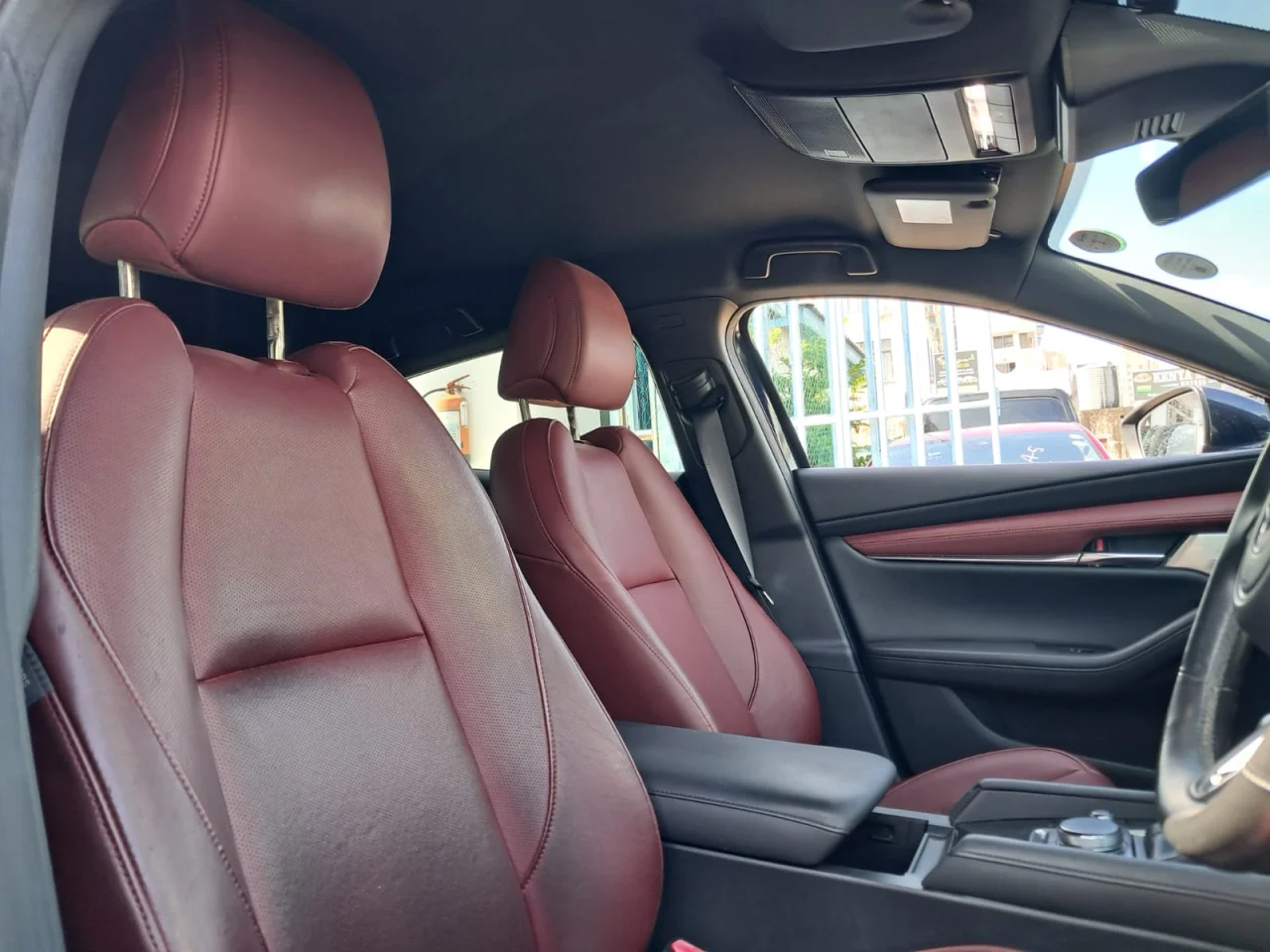
What sets the Mazda 3 apart from the usual crop of Japanese saloons on Kenyan roads is how it drives. Mazda builds the 3 around its Skyactiv philosophy — lighter body structures, high-compression direct-injection engines, and a suspension tune that rewards a confident driver rather than numbing everything out. Add Mazda's Kodo "Soul of Motion" styling and a genuinely upmarket cabin for the price bracket, and it is easy to see why the 3 attracts buyers who want something a step more engaging than a Toyota Corolla or Nissan Sylphy, without stepping up to German-brand running costs.
This guide pulls together everything a Kenyan buyer actually needs before signing for one: current price ranges, how the KRA import-duty maths works, which model years to prioritise, known weak points, and how the Mazda 3 stacks up against its closest rivals in the local second-hand market.
Mazda 3 at a Glance
| Aspect | Detail |
|---|---|
| Also known as | Mazda Axela (Japan, first three generations) |
| Body styles | 5-door hatchback and 4-door sedan |
| Best for | Professionals and small families who want a fuel-efficient, engaging drive |
| Popular engines in Kenya | 1.5L and 2.0L Skyactiv-G petrol; 1.8L Skyactiv-D diesel on some units |
| Fuel economy (avg.) | Petrol: 18–22 km/l in mixed Kenyan driving |
| Common transmission | 6-speed automatic (most import units); manual is rarer locally |
| Drivetrain | Front-wheel drive (FWD) |
| 2026 import rule | Must be manufactured in 2019 or later |
| Used price range | Approx. KSh 1.5M – 2.8M |
| New price range | Approx. KSh 3.8M – 5.2M |
A Brief History: Mazda 3 Generations, From BK to BP
Knowing which generation you are looking at matters more than the badge, because reliability, tech and even the correct spare parts differ across them. Here is the full Mazda 3 generation timeline:
Launched to replace the Mazda 323/Protégé, the first Mazda 3 was built on a shared Ford platform and introduced buyers to sportier handling than the segment's norm. Petrol engines ranged from 1.6L to 2.3L, with the turbocharged Mazdaspeed3/MPS sitting at the top of the range. These are now well past Kenya's 8-year import cut-off and only exist locally as older, already-registered units.
A larger, more refined car, the BL generation is the one where Mazda introduced Skyactiv technology in 2012 — a more rigid body, direct-injection engines and a new 6-speed gearbox that materially improved fuel economy. Watch for front suspension bushings and control arms on higher-mileage BL cars; they tend to need attention around the 150,000–160,000 km mark.
This is the generation that brought Mazda's Kodo "Soul of Motion" design language and a full Skyactiv engine line-up (2.0L and 2.5L petrol). It is also the most common Mazda 3 generation on Kenyan roads today, since most units cleared for import fall inside this window. Some 2016–2017 model-year cars had an infotainment screen that could freeze or blank out, which Mazda addressed through service updates — worth testing thoroughly on a used unit before you buy.
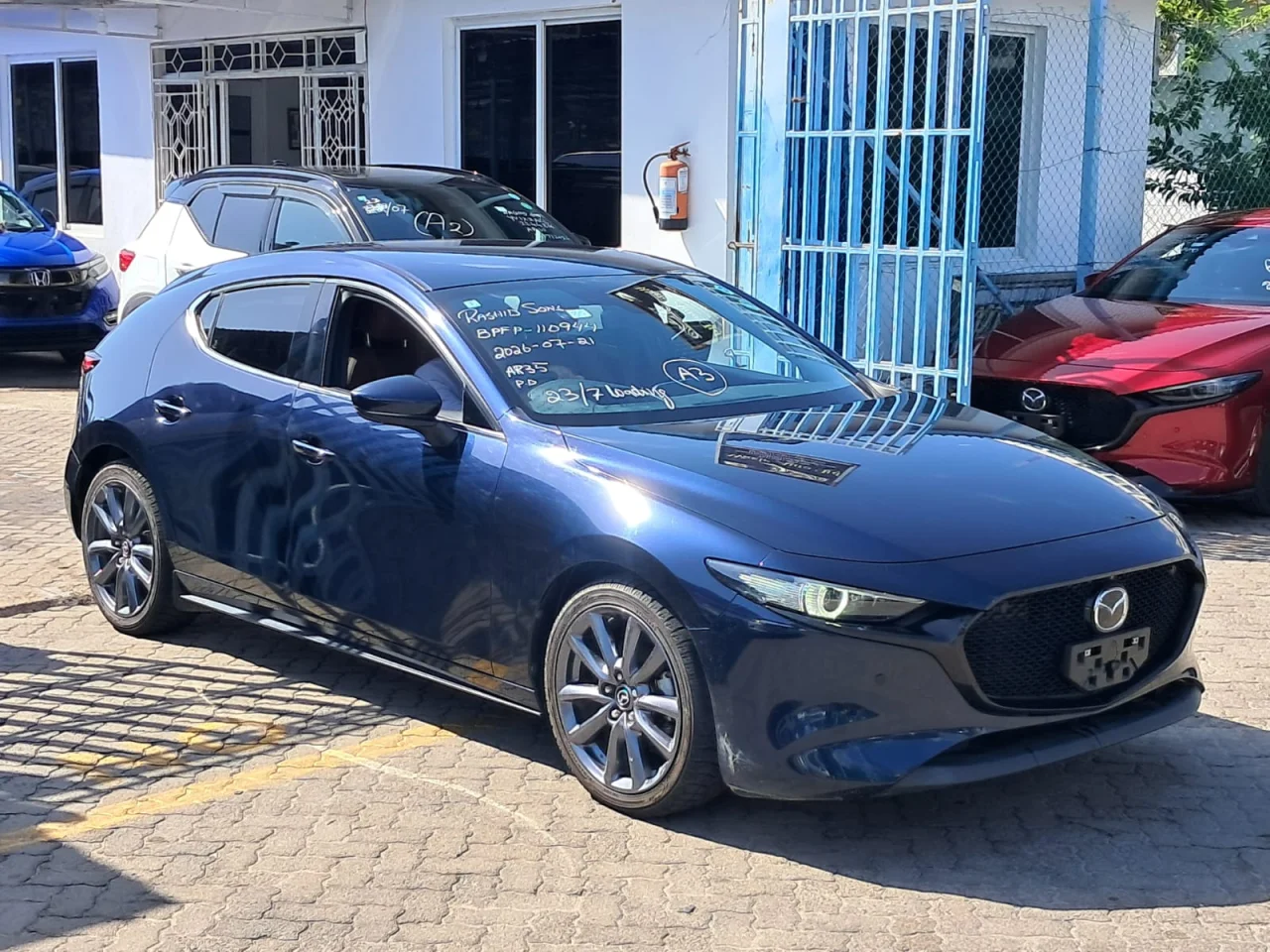
The current-shape Mazda 3 sharpened the styling further and introduced Skyactiv-X, a spark-controlled compression-ignition petrol engine that blends some of a diesel's efficiency with petrol refinement. Because Kenya's 8-year rule pushes the eligible import window forward every year, BP-generation cars (2019 onward) will make up an increasing share of what is actually importable, and they generally carry the most complete safety kit — radar cruise control, lane-keep assist and blind-spot monitoring on higher grades.
Engine Options and Real-World Fuel Economy in Kenya
Most Mazda 3 units sold in Kenya run one of the following Skyactiv-G naturally aspirated petrol engines, paired to a 6-speed automatic:
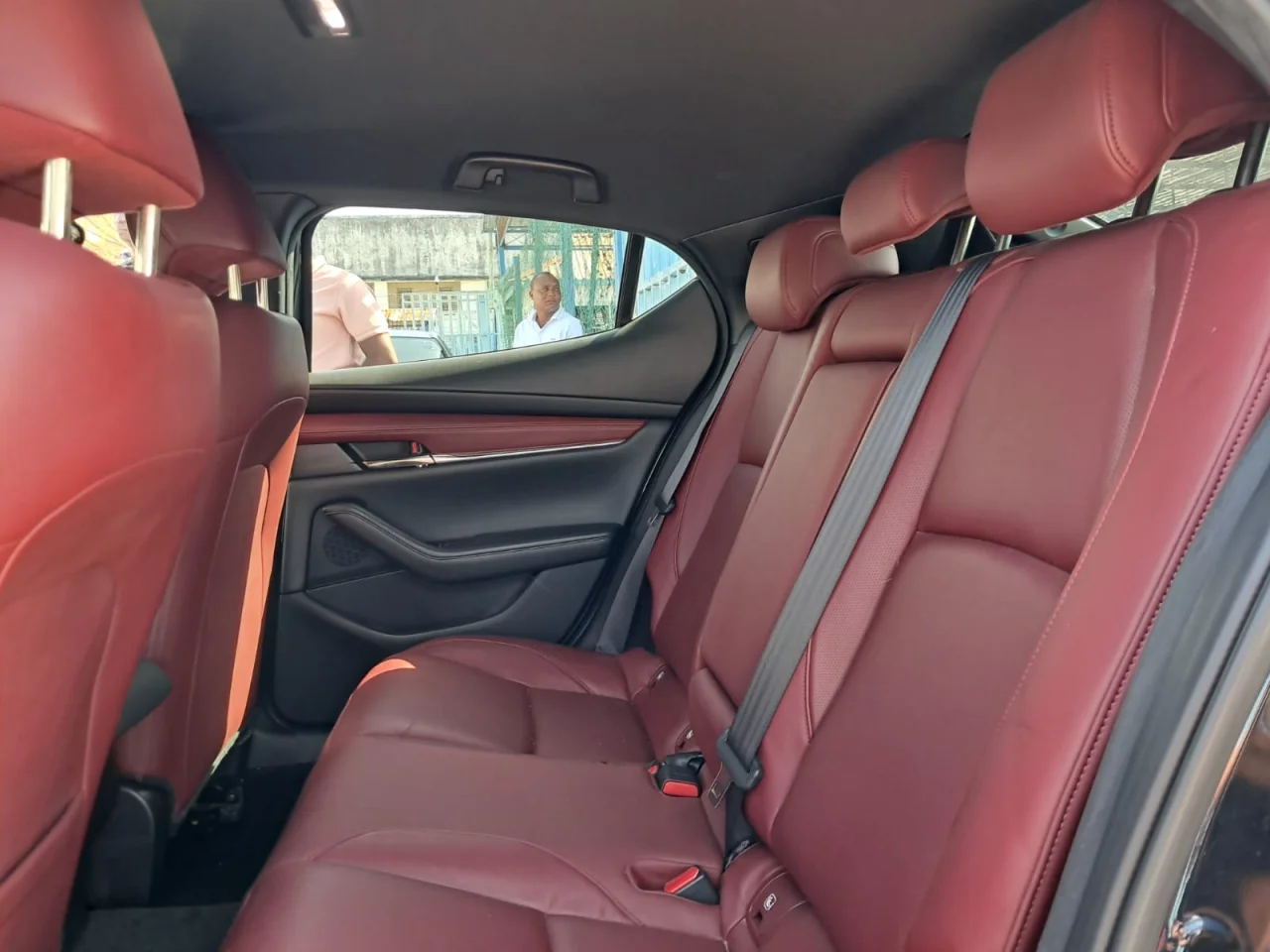
One underrated reason the Mazda 3 feels good on Kenyan tarmac specifically is G-Vectoring Control — Mazda's software that subtly trims engine torque mid-corner to shift weight onto the front tyres. On the patchwork surfaces and off-camber bends common on upcountry roads, it noticeably reduces the need for mid-corner steering correction.
Mazda 3 Price in Kenya (2026)
Prices move with the shilling, shipping costs and each unit's mileage and spec, so treat the figures below as a realistic band rather than a fixed quote — always confirm against current listings before you commit.
| Model Year / Type | Typical Price (KSh) | Notes |
|---|---|---|
| 2017–2018, used | 1.5M – 2.0M | Mostly BM-generation hatchbacks, 1.5L or 2.0L petrol |
| 2019, used | 1.9M – 2.4M | Best value pick in most local listings |
| 2020, used | 2.2M – 2.6M | Includes early BP-generation units and some diesel (XDL) trims |
| 2021–2022, used | 2.4M – 2.8M | Lower mileage, closer to current import cut-off |
| Brand new | 3.8M – 5.2M | Depends on grade, engine and dealer financing terms |
The fastest way to see what is actually on the market right now — rather than relying on averages — is to browse live Mazda 3 and Mazda Axela listings on Sanalist, where you can compare mileage, engine size and seller directly, or check the wider Mazda cars for sale in Kenya category for CX-5s, BT-50s and other Mazda models alongside the 3.
How Much Does It Cost to Import a Mazda 3 to Kenya?
If you are importing directly from Japan or the UK rather than buying a car already cleared in Kenya, the landed cost is driven by KRA's import-duty formula, not the invoice price you paid at auction.
Kenya only allows the registration of used vehicles that are no more than 8 years old from their year of manufacture. In 2026, that means a Mazda 3 must have been manufactured in 2019 or later to clear customs — a 2018 unit is now time-barred, regardless of how well it has been kept.
KRA does not tax your invoice price directly. It uses the Current Retail Selling Price (CRSP) — its own reference value for that model — or your invoice value, whichever is higher, then applies an age-based depreciation (up to roughly 65% off for a car near the 8-year limit) to arrive at the Customs Value that everything else is calculated on.
- Import Duty — 35% of the Customs Value.
- Excise Duty — roughly 20% for engines up to 1500cc, rising for larger engines, charged on the Customs Value plus Import Duty.
- VAT — 16%, charged on the Customs Value plus Import Duty plus Excise Duty.
- Import Declaration Fee (IDF) — 3.5% of the Customs Value.
- Railway Development Levy (RDL) — 2% of the Customs Value.
Because each tax is layered on top of the last, the taxes together often add up to more than half the car's Customs Value. For a worked example with your exact chassis and engine size, run the numbers through an independent Kenya car import duty calculator before you commit to a purchase.
A Worked Example (Illustrative Only)
Say a 2019 Mazda 3 2.0L has a depreciated Customs Value of roughly KSh 2,000,000. Here is how the taxes build up:
| Item | Amount (KSh) | Running total (KSh) |
|---|---|---|
| Customs Value | 2,000,000 | 2,000,000 |
| Import Duty (35%) | 700,000 | 2,700,000 |
| Excise Duty (20% of running total) | 540,000 | 3,240,000 |
| VAT (16% of running total) | 518,400 | 3,758,400 |
| IDF (3.5% of Customs Value) | 70,000 | — |
| RDL (2% of Customs Value) | 40,000 | — |
| Total taxes | ≈ 1,868,400 | — |
That is roughly KSh 1,868,400 on top of the Customs Value, before shipping, port and clearing-agent fees. Treat this as a mechanism check, not a quote: your actual CRSP bracket, chassis code and the shilling exchange rate on clearing day will move the real number.
This is also exactly why most Kenyan buyers find it cheaper, in practice, to buy a Mazda 3 that a dealer has already imported and cleared, rather than importing one themselves — the dealer's landed cost is baked into the asking price, without the paperwork risk of getting the CRSP bracket or depreciation schedule wrong.
Mazda 3 vs the Competition in Kenya
The Mazda 3's closest rivals in the Kenyan compact-car segment are the Toyota Corolla/Auris, the Honda Civic and the Subaru Impreza. Here is how they compare on the things that matter for day-to-day ownership:
| Factor | Mazda 3 | Toyota Corolla / Auris | Honda Civic |
|---|---|---|---|
| Driving feel | Sportiest, most engaging steering | Comfort-focused, easy to drive | Sporty, similar spirit to the 3 |
| Fuel economy | 18–22 km/l | Similar, hybrids do better | Comparable, slightly thirstier |
| Parts availability | Good, but thinner than Toyota | Best in Kenya, by far | Good in major towns |
| Resale value | Strong, holds value well | Strongest — Kenya's default choice | Solid, smaller buyer pool |
| Interior quality | Most upmarket-feeling cabin | Practical, less premium feel | Modern, tech-forward |
If resale liquidity and parts availability matter more to you than driving enjoyment, the Toyota Corolla/Auris remains the safer bet in Kenya. If you specifically want the way the Mazda 3 drives but need more ground clearance, its sibling the Mazda CX-5 is worth cross-shopping too.
Is the Mazda 3 Reliable? Common Problems to Check For
Independent owner-reported data from sources like RepairPal and European TÜV inspection reports consistently flag a similar set of wear items across Mazda 3 generations. None of these are dealbreakers, but they are worth budgeting for and inspecting before you buy:
Confirm the Japan auction sheet's condition grade and mileage against the odometer, check for flood or accident repair evidence around the engine bay and boot floor, and have an independent mechanic verify the timing chain (Skyactiv engines use a chain, not a belt, so there is no scheduled replacement interval to budget for — but a chain that has stretched will rattle on cold start).
Maintenance and Running Costs in Kenya
Mazda service intervals are broadly similar to other Japanese brands — oil and filter changes every 5,000–10,000 km, with spark plugs, air filters and brake fluid on longer cycles. Where the Mazda 3 costs a little more than a Corolla is genuine parts pricing and the smaller number of independent garages that stock Mazda-specific parts as standard inventory, though this gap has narrowed as the model has become more common locally.
For parts, it is worth comparing prices across a few sellers rather than the first quote you get — browse vehicle parts and accessories listings to see what genuine and aftermarket Mazda parts are going for locally. If you do not already have a mechanic you trust with Skyactiv engines, you can also post a request under "I'm looking for a mechanic" and compare responses before committing to a garage.
Where to Buy a Genuine Mazda 3 in Kenya
For years, CMC Motors Group held the exclusive Mazda franchise in Kenya. CMC exited the passenger-vehicle brands it represented — including Ford, Suzuki and Mazda — in 2023 as part of a strategic shift toward agricultural machinery, and it has since wound down its Kenyan operations entirely. In practice, this means most Mazda 3s on Kenyan roads today are not bought from a single official showroom; they arrive through direct Japan or UK used-import channels and are sold by independent dealers and private owners. That makes it more important, not less, to buy from a seller you can verify.
The safest starting point is to compare multiple, currently available units side by side rather than relying on a single dealer's yard. You can browse the Mazda cars for sale in Kenya category on Sanalist, check individual seller profiles such as Wazir Auto Ltd (who list fresh-import Mazda 3 units out of Mombasa), or search the broader cars for sale in Kenya marketplace if you are also cross-shopping other models. If you would rather test the driving experience before committing to a purchase, Sanalist's car hire and vehicle rental listings are worth a look too.
Pros, Cons and Verdict
- Genuinely enjoyable to drive, with sharper steering and handling than most rivals in the segment
- Strong real-world fuel economy across the petrol range
- Upmarket cabin design and materials for the price bracket
- Comprehensive safety kit on later BP-generation units
- Holds resale value well relative to non-Toyota competitors
- Firmer ride than a Corolla, which some buyers find less comfortable on rough upcountry roads
- Smaller rear seat and boot space than segment rivals
- Genuine parts and Mazda-experienced mechanics are less widespread than for Toyota
- No single official Kenyan showroom since CMC's 2023 exit, so due diligence on sellers matters more
If you want a compact car that feels genuinely good to drive and sips fuel efficiently, and you are comfortable buying through the private/dealer-import market rather than a single franchise showroom, the Mazda 3 is one of the better-value picks in Kenya's compact-car segment right now. Buyers who prioritise the widest possible parts network and maximum resale liquidity above all else will still find the Toyota Corolla the safer default — but for anyone cross-shopping the two back to back, the Mazda 3 usually wins on the drive itself.
Frequently Asked Questions
Is the Mazda 3 the same car as the Mazda Axela?
Yes. The Mazda Axela is the Japanese-market name for the Mazda 3 across its first three generations. If you see "Axela" on a Japan auction sheet or logbook, it is the same car sold as the Mazda 3 in Kenya.
How much is a Mazda 3 in Kenya in 2026?
A used Mazda 3 typically costs between KSh 1.5 million and KSh 2.8 million depending on year, engine and mileage, while a brand-new unit runs roughly KSh 3.8 million to KSh 5.2 million.
What is the fuel consumption of the Mazda 3 in Kenya?
Most petrol-engined Mazda 3 units (1.5L and 2.0L Skyactiv-G) return 18–22 km/l in normal mixed driving, with the 1.5L at the more efficient end and the 2.5L slightly thirstier.
Can I import a 2018 Mazda 3 into Kenya in 2026?
No. Kenya's 8-year import rule means a 2026 import must have been manufactured in 2019 or later. A 2018 model year is now time-barred.
Is the Mazda 3 reliable?
It has a broadly solid reliability record, with the main issues being suspension wear items common to the segment and, on some 2016–2017 units, infotainment screens that need a software update. Check owner-reported data on sites like RepairPal and get a pre-purchase inspection before buying any used unit.
Mazda 3 or Toyota Corolla — which is better for Kenya?
The Mazda 3 generally drives better and feels more upmarket inside; the Toyota Corolla wins on parts availability and resale liquidity. Choose the Mazda 3 if driving enjoyment matters to you; choose the Corolla if minimising ownership hassle matters more.
Where can I buy a genuine Mazda 3 in Kenya?
Since CMC Motors exited the Mazda franchise in 2023, most Mazda 3 units in Kenya come through the used-import market. Compare verified listings on the Mazda cars for sale in Kenya category on Sanalist before buying from any single dealer.
Which Mazda 3 engine should I choose?
The 2.0L Skyactiv-G is the best all-round choice for most Kenyan buyers, balancing highway performance with 18–20 km/l fuel economy. Choose the 1.5L if fuel economy is your top priority, or the 2.5L if you regularly carry a full load of passengers or luggage.
Final Thoughts
The Mazda 3 has earned its place as one of Kenya's most cross-shopped compact cars for a simple reason: it does not feel like a compromise. You get genuine driving enjoyment, strong fuel economy, and a cabin that feels a class above its price — provided you buy carefully in a market without a single official showroom to fall back on. Start by comparing what is actually available right now on Sanalist's Mazda listings, cross-check pricing against the full cars-for-sale marketplace, and get any used unit independently inspected before you pay a deposit.