



How to Buy Property in Kenya in 2026: The Complete Investor's Guide

Buying property in Kenya is one of the most significant financial decisions you will ever make. Whether you are a first-time buyer stepping nervously onto the property ladder, a seasoned investor looking to diversify, or a diaspora Kenyan looking to plant roots back home — the Kenyan real estate market in 2026 offers extraordinary opportunity. But it also demands extraordinary care.
The good news? Nairobi's property market has matured enormously over the last decade. The Hass Property Index — East Africa's most trusted independent measure of real estate performance — shows that prime residential property in Nairobi has delivered consistent long-term capital appreciation, outperforming many traditional savings instruments. But not all properties are created equal. And not all purchases are made wisely.
This guide will walk you through everything you need to know: how the Kenyan property market works, what separates a great investment from a mediocre one, the legal landscape, the areas to watch, and two genuinely compelling developments — Ankori Westlands and Lakehills — that exemplify what intelligent, future-proof property investment looks like in Nairobi today.
"In Nairobi, it is not just about buying a property. It is about buying the right property — at the right time, in the right location, from the right developer."
Understanding Kenya's Property Market in 2026
Kenya's real estate sector remains one of the most dynamic in Sub-Saharan Africa. The Kenya National Bureau of Statistics reports that real estate contributes over 9% to GDP, and urbanisation rates — with Nairobi growing by roughly 4% annually — continue to drive structural demand for quality housing that far exceeds supply.
The shortage of Grade A residential stock in Nairobi's prime zones is particularly acute. International firms, NGOs, diplomatic missions, and Kenya's own expanding professional class all compete for the same limited pool of well-located, high-quality homes. This imbalance between supply and demand is the bedrock of why well-chosen Nairobi property continues to appreciate.
But the market is not monolithic. There is a meaningful divide between prime property — well-located, well-designed, well-managed — and the vast middle ground of developments that promise much and deliver little. Understanding this divide is the first step to buying wisely.
The Five Questions You Must Answer Before You Buy

Before you sign anything, transfer any money, or fall in love with a show unit, these five questions need honest, well-researched answers. They are the difference between a property that works for you and one that quietly drains your wealth.
Your purpose shapes everything — the location, the size, the amenity set, the payment plan, and the developer you choose. Owner-occupiers prioritise space, community, and proximity to schools and lifestyle. Investors prioritise yield, occupancy stability, and capital appreciation. These are not always the same property, though the best developments — like Ankori Westlands — deliver on all three simultaneously.
In Kenya's off-plan market, the developer's credibility is everything. A beautiful render means nothing if the company behind it has never delivered a completed project. Research their previous developments, visit completed sites, speak to past buyers, and verify their financial standing. Always check that your selling agent — not just the developer — is a reputable, registered firm. HassConsult Real Estate Ltd is widely regarded as East Africa's most trusted property consultancy and a benchmark for professional agency standards in Kenya.
Title deed fraud remains a significant risk in Kenya. Before any purchase, engage a qualified advocate to conduct a title search at the relevant land registry, verify that the seller has legal capacity to sell, check for any encumbrances or caveats, and confirm that the land is appropriately zoned for the proposed development. The Ministry of Lands and Public Works offers online title search services that can provide an initial verification.
Location is the single most powerful determinant of property value over time. Look beyond the present — assess planned infrastructure (roads, transport corridors, utilities), proximity to employment hubs, schools, and retail, and the overall trajectory of the neighbourhood. Areas like Westlands and the Kiambu Road corridor have consistently demonstrated these characteristics. Explore Sanalist for a curated view of Kenya's most promising developments by location.
Purchase price is only the beginning. Budget carefully for stamp duty (4% of property value), legal fees (typically 1–1.5%), agent commission, registration fees, service charges, and — if applicable — mortgage arrangement costs. For off-plan purchases, model your cashflow across the full payment plan period to ensure you can comfortably meet instalments without financial stress. Use a reputable CBK-regulated mortgage lender if financing is required.

Off-Plan vs Ready Property: Which Is Right for You?
One of the most consequential choices in Kenya's property market is whether to buy off-plan — purchasing before or during construction — or to buy a completed, ready property. Both have compelling merits. The right answer depends entirely on your circumstances, risk appetite, and investment horizon.
✓ Flexible payment plans spread over construction period
✓ Capital appreciation between purchase and completion
✓ New build quality and modern specifications
✗ Requires trust in the developer's delivery capability
✗ Completion delays are a real risk without a credible developer
✓ Immediate rental income potential
✓ Easier to secure mortgage financing
✓ No construction risk
✗ Higher entry price — you pay for certainty
✗ Older stock may require refurbishment spend
For buyers with a medium to long investment horizon — say, three years and beyond — a well-chosen off-plan purchase from a credible developer in a prime location is typically the most powerful wealth-building strategy available in Kenya today. The combination of discounted entry pricing, capital appreciation during construction, and a structured payment plan creates a compounding return profile that ready property simply cannot match.
Spotlight: Ankori Westlands — The Urban Resort Standard
If you are looking at apartment investment in Nairobi, the benchmark to measure against right now is Ankori Westlands — a Grade A off-plan development by Hale End Properties Limited, exclusively sold by HassConsult Real Estate Ltd.
Set on 1.9 acres on revitalised Rhapta Road in the heart of Westlands, Ankori is genuinely different from what Nairobi has seen before. It is not simply an apartment block. It is an activated urban resort — three residential blocks (A, B, and C) arranged around a grand central courtyard, offering 1-, 2-, and 3-bedroom luxury apartments from KSh 6.5 million, with a 36-month payment plan and a projected Q4 2028 completion.
What truly distinguishes Ankori from the crowd is its Elevate resident experience programme — a curated calendar of fitness classes, wellness sessions, entertainment screenings, co-working activations, and community events. This is not mere marketing. It is an operationally delivered lifestyle layer that drives higher occupancy stability, reduces tenant churn, and sustains rental premiums — critical metrics for any investor's return calculation.
For those researching apartments for sale in Westlands, Ankori represents the clearest expression of where the Nairobi apartment market is heading — and why getting in early matters.
Spotlight: Lakehills — Premium Villa Living Near Runda
For buyers whose vision extends beyond apartments — to private gardens, double-height foyers, and the calm of a gated community — Lakehills is the most compelling answer in Nairobi's current market.
Located off Kiambu Road and overlooking the Paradise Lost lake, Lakehills is a premium gated community of 114 four-bedroom villas set across 14.48 acres of lush, landscaped greenery — minutes from Nairobi's diplomatic corridor of Runda, Ridgeways, and Gigiri. With villas from KSh 39 million and a Q2 2028 completion target, it is aimed at buyers seeking an exceptional family lifestyle without compromising on location or quality.
Each Lakehills villa is designed as a private sanctuary with open-plan living spaces, glass-wrapped lounges beneath extended-height windows, and seamless flow between indoor and outdoor spaces. The private garden wraps around the living areas; spacious terraces and balconies extend the home into Nairobi's year-round green landscape.
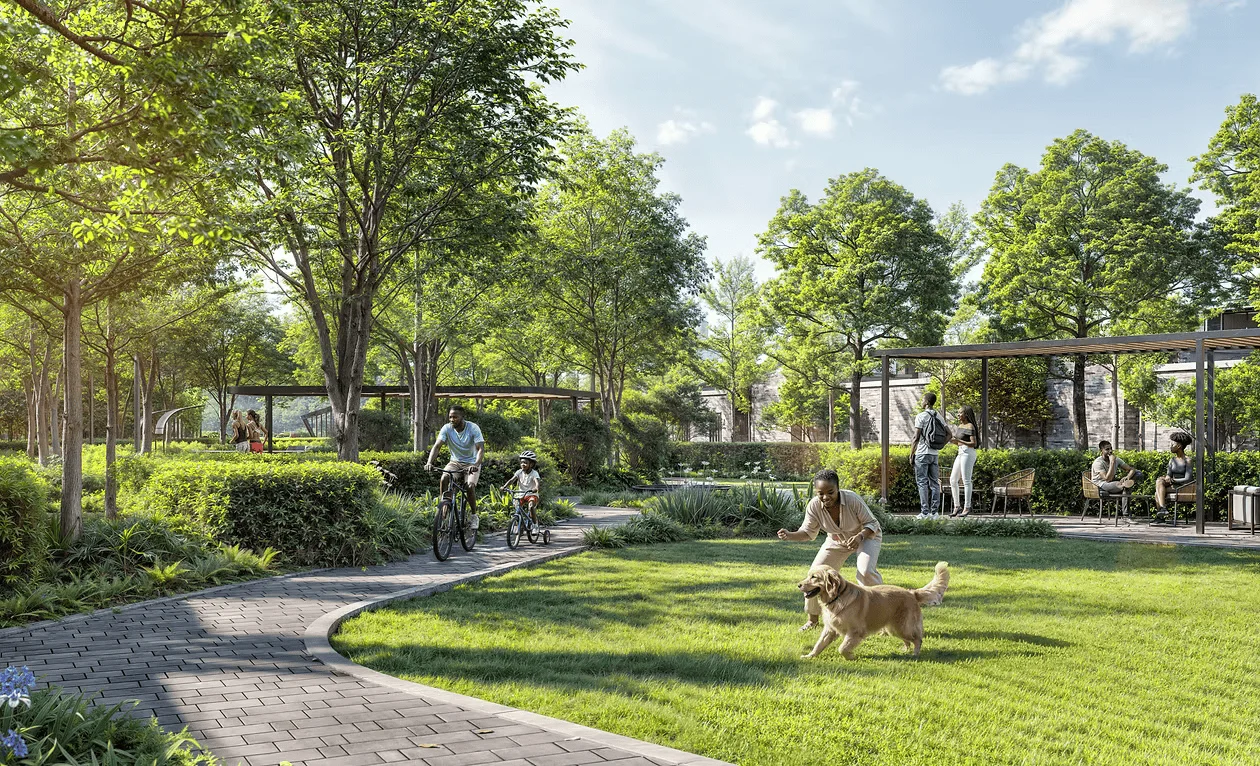
The community infrastructure at Lakehills is equally considered. Lakehills Park — 23,751 sq ft of curated green space with playing fields, picnic lawns, reflection pools, and a pickleball court — anchors the neighbourhood. Lakehills Retreat, the residents-only leisure hub, adds an infinity pool, gym, yoga lawn, and dedicated kids' areas. This is not simply a residential development. It is a masterplanned community built around how families actually live. Explore more premium properties in Nairobi on Sanalist.
The Best Areas to Buy Property in Nairobi in 2026
Location is not merely a factor in property investment — it is the factor. In Nairobi's layered, nuanced geography, understanding which areas are genuinely appreciating versus which are stagnating is essential to making a sound purchase.
The Legal Landscape: What Every Kenyan Property Buyer Must Know
Kenya's property legal framework has been significantly modernised over the last decade. The Land Act, the Land Registration Act, and the National Land Commission Act collectively govern how land is owned, transacted, and regulated. Understanding the basics protects you from costly errors.
What Makes a Development Worth Buying Into?
Beyond location and price, there is a set of qualitative factors that separate properties that genuinely grow in value from those that plateau or decline. Experienced investors in Nairobi look for these markers before committing a single shilling.
Financing Your Property Purchase in Kenya
Kenya's mortgage market has matured significantly, with a growing number of banks offering competitive home loan products. However, mortgage penetration remains low — many buyers still prefer to use developer payment plans, personal savings, or diaspora remittances to fund purchases.
Key lenders to explore include KCB Bank, Equity Bank, Absa Kenya, and the Housing Finance Corporation — all offering varying rates, tenors, and qualifying criteria. Shop between at least three lenders before committing, and factor the true cost of borrowing (including arrangement fees, insurance, and valuation costs) into your affordability calculation.
For diaspora buyers, Kenya's Foreign Exchange regulations permit repatriation of funds for property purchase, and several banks now offer diaspora mortgage products with competitive rates. The key is to plan early — currency timing and KRA compliance can significantly affect the effective cost of your purchase.
Frequently Asked Questions
Making Your Decision: The Right Property, the Right Time
Kenya's property market rewards those who are patient, informed, and disciplined. The buyers who have built genuine wealth through real estate here are not those who chased the cheapest headline price — they are those who chose the right location, the right developer, and the right product for their specific goals, and then committed fully.
Whether you are drawn to the urban energy of Ankori Westlands — an activated urban resort redefining apartment living in Nairobi's most dynamic neighbourhood — or to the tranquil, masterplanned family haven of Lakehills on Kiambu Road, you are looking at two of the most compelling residential propositions in Nairobi today.
Both are sold exclusively by HassConsult Real Estate Ltd, Kenya's most established and data-led property consultancy. Both offer off-plan payment plans that make the investment accessible. And both are listed — alongside Kenya's widest curated selection of off-plan and ready properties — on Sanalist, Kenya's most trusted property classified ads platform.