




Types of Cookware and Utensils by Material – Ceramic, Enamel, Cast Iron, Copper, Glass & More | SanaList Kenya
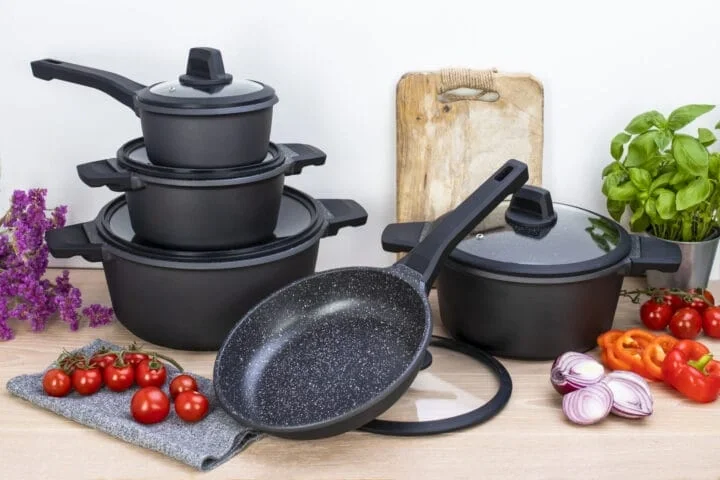
Types of Cookware and Kitchen Utensils by Material – Ceramic, Enamel, Cast Iron, Copper, Glass & More: A Complete Guide
The material your cookware and kitchen utensils are made from is one of the most important — and most overlooked — decisions in setting up a kitchen. It affects how evenly your food cooks, how safe it is for your family's health, how long your pots and pans last, and how easy they are to clean. Whether you are shopping for kitchen equipment in Kenya, upgrading your cookware, or simply trying to understand what you already own, this guide covers every major cookware and utensil material in detail.
From traditional ceramic and clay pots to modern non-stick, titanium, and silicone utensils — each material has specific properties, advantages, limitations, and ideal uses. Understanding these differences helps you make smarter purchasing decisions, cook better food, and avoid potential health risks from using the wrong cookware for the wrong task.
Table of Contents
- Ceramic Cookware and Utensils
- Enamel Cookware
- Cast Iron Cookware
- Stainless Steel Cookware and Utensils
- Copper Cookware and Utensils
- Aluminium Cookware
- Glass Cookware and Bakeware
- Non-Stick Cookware (PTFE and Ceramic Coated)
- Carbon Steel Cookware
- Clay and Earthenware Pots
- Silicone Kitchen Utensils and Bakeware
- Wooden and Bamboo Utensils
- Titanium Cookware
- Cookware Material Comparison Table
- How to Choose the Right Cookware Material for Your Kitchen
- Frequently Asked Questions
1. Ceramic Cookware and Utensils
What Is Ceramic Cookware?
Ceramic cookware is made from inorganic, non-metallic materials — primarily clay and other earth minerals — that are shaped and fired at extremely high temperatures to harden and vitrify the surface. The result is a dense, glass-like, non-porous material that is completely inert and chemically stable. Ceramic cookware includes baking dishes, casserole pots, tagines, ramekins, and mixing bowls, as well as ceramic-coated metal pans that use a sol-gel ceramic layer over an aluminium or steel core. Ceramic utensils include serving spoons, ladles, and decorative kitchenware.
Properties and Advantages of Ceramic Cookware
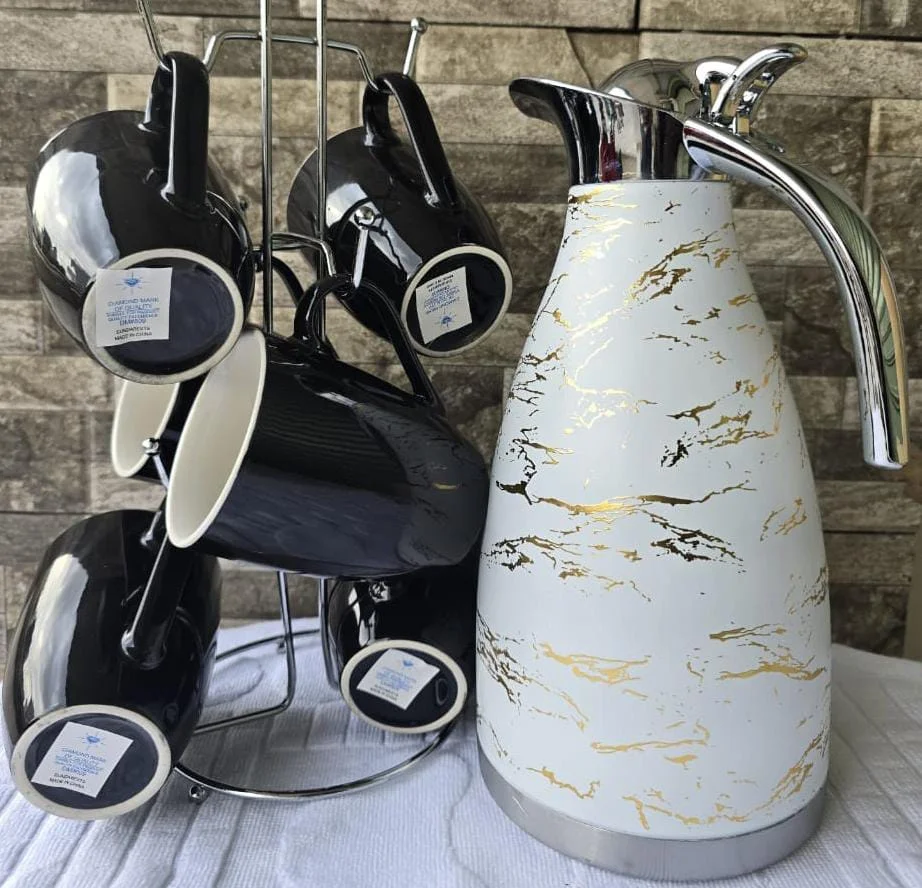
Ceramic is one of the most chemically inert cookware materials available, meaning it does not react with acidic or alkaline foods, does not leach metals or chemicals into your cooking, and does not absorb odours or flavours over time. It distributes heat gently and evenly, making it ideal for slow cooking, baking, and oven-to-table serving. Ceramic cookware is also oven-safe at very high temperatures — most pieces tolerate up to 250°C to 300°C — and goes from oven to table beautifully, doubling as serving dishes. The glazed surface is smooth, naturally non-stick when properly greased, and dishwasher-safe in most cases.
Ceramic non-stick coatings on metal pans are marketed as a safer alternative to PTFE (Teflon) coatings, as they are free from PFOA and PFOS — chemicals that were associated with health concerns in older non-stick cookware. According to the World Health Organization (WHO), reducing exposure to persistent organic pollutants in food contact materials is an important food safety consideration.
Limitations of Ceramic Cookware
The primary limitation of ceramic cookware is its fragility. Ceramic cracks and chips when dropped or exposed to sudden temperature changes (thermal shock) — for instance, moving a cold ceramic dish directly into a hot oven. Pure ceramic pots and baking dishes also heat and cool relatively slowly, which is a benefit for slow cooking but a disadvantage for tasks requiring rapid heat adjustments. Ceramic coatings on metal pans tend to lose their non-stick properties faster than PTFE coatings, typically within one to three years of regular use, especially if metal utensils are used on the surface.
Best Uses for Ceramic Cookware
Ceramic cookware excels in baking, roasting, slow-cooking casseroles, making gratins, and oven-to-table serving of soups, stews, and rice dishes. Ceramic non-stick frying pans are ideal for eggs, pancakes, fish, and other delicate foods at low to medium heat. Ceramic baking dishes and ramekins are indispensable for desserts like crème brûlée, soufflés, and baked custards. Browse kitchen and home listings on SanaList to find ceramic cookware available in Kenya.
2. Enamel Cookware
What Is Enamel Cookware?
Enamel cookware is metal cookware — most commonly cast iron or steel — that has been coated with one or more layers of porcelain enamel, a form of glass fused to the metal surface at temperatures above 800°C. The result combines the exceptional heat retention of cast iron or the lightweight practicality of steel with a smooth, colourful, non-reactive glass surface. Enamel cookware is among the most popular and recognisable cookware in the world, with iconic Dutch ovens and braisers sold by brands like Le Creuset being prime examples of enamel-coated cast iron.
Properties and Advantages of Enamel Cookware
Enamel-coated cookware offers an outstanding combination of properties. The porcelain enamel surface is completely non-reactive — unlike bare cast iron, it does not interact with acidic foods like tomatoes, citrus, or wine-based sauces, making it ideal for a far wider range of recipes. The enamel surface is smooth, easy to clean, resistant to staining, and does not require seasoning the way bare cast iron does. Enamel cookware is naturally beautiful and comes in a wide range of vibrant colours, serving elegantly at the dining table. The underlying cast iron core retains and distributes heat exceptionally well, maintaining steady cooking temperatures for slow braises, soups, and stews.
Enamel cookware is safe for all cooktops including gas, electric, ceramic, and induction (when made over a cast iron or magnetic steel base). Most enamel pots and Dutch ovens are oven-safe up to 200°C–260°C, making them genuine all-in-one cooking vessels for stovetop and oven use.
Limitations of Enamel Cookware
The enamel surface can chip if the cookware is dropped or struck against hard surfaces. Chipped enamel exposes the underlying metal and creates rough surfaces that are harder to clean and may harbour bacteria. High-quality enamel cookware — particularly enamel-coated cast iron — is significantly heavier than other cookware types due to the cast iron core, which can be a practical challenge for users who find heavy pots difficult to handle. Genuine high-quality enamel-on-cast-iron cookware is also among the more expensive options on the market, though enamel-on-steel alternatives are available at lower price points.
Best Uses for Enamel Cookware
Enamel cookware is perfectly suited to long, slow cooking methods: braises, pot roasts, bean stews, soups, curries, and slow-simmered sauces. Enamel Dutch ovens are exceptionally popular for no-knead bread baking. Enamel-coated roasting pans work brilliantly for roasting meats and vegetables in the oven. Enamel-on-steel saucepans and stockpots are practical, affordable everyday options for Kenyan kitchens. Find enamel pots and cookware on SanaList Kenya for competitively priced options.
3. Cast Iron Cookware
What Is Cast Iron Cookware?
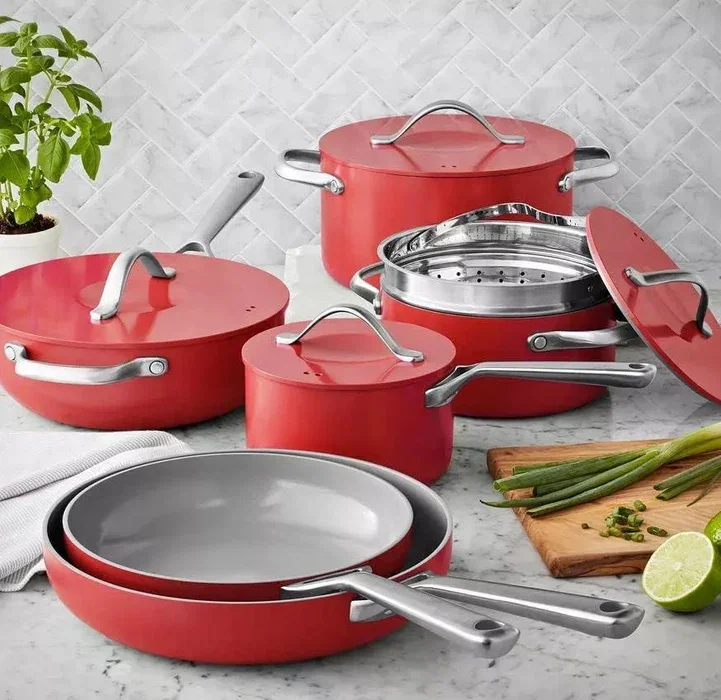
Cast iron cookware is made by pouring molten iron into moulds and allowing it to cool and solidify, creating extremely dense, heavy cooking vessels. Cast iron has been used for cooking for over two thousand years and remains one of the most durable and respected cookware materials in the world. Common cast iron cookware includes skillets, frying pans, griddles, Dutch ovens, woks, and braising pans. Cast iron can be used bare (seasoned) or coated with enamel.
Properties and Advantages of Cast Iron Cookware
Cast iron's defining characteristic is its extraordinary heat retention. Once heated, cast iron maintains its temperature even when cold food is added — making it ideal for achieving a consistent sear on meat, maintaining the temperature of deep-frying oil, and keeping food warm at the table. Cast iron heats slowly and distributes heat very evenly across its entire surface and up its sides. It is indestructible when cared for correctly — quality cast iron cookware is routinely passed down through generations and can last a lifetime with proper maintenance.
Seasoned cast iron develops a natural non-stick surface over time as layers of polymerised oil build up on the surface. Cast iron is safe for all cooktop types and can go from stovetop to oven to campfire without issue — making it one of the most versatile cookware materials for both home kitchens and outdoor cooking, which is significant for Kenyan households that cook on gas jikos, charcoal, wood fires, or electric cookers. According to research published by the National Institutes of Health (NIH), cooking with cast iron can modestly increase dietary iron intake, which may be beneficial in populations with iron deficiency.
Limitations of Cast Iron Cookware
Cast iron is very heavy, which can make large pieces — particularly Dutch ovens and large skillets — physically difficult to manoeuvre, especially for elderly users or those with wrist or joint issues. Bare cast iron requires regular seasoning (oiling and baking) to maintain its non-stick surface and prevent rusting, and it must be dried thoroughly after washing as prolonged moisture contact causes rust. It reacts with acidic foods (tomatoes, vinegar, wine) if used unseasoned, which can strip the seasoning and impart a metallic taste to food. Cast iron also takes considerably longer to heat than other materials.
Best Uses for Cast Iron Cookware
Cast iron excels at high-heat searing of meat, frying, baking cornbread and skillet cakes, pan-frying chapati and flatbreads, making shakshuka, and slow-cooking stews and beans. Its ability to go from stovetop to oven makes it invaluable for dishes that start on the hob and finish in the oven, such as frittatas. Cast iron griddles are superb for pancakes, bacon, and grilling vegetables. Visit SanaList's kitchen section to find cast iron cookware listings in Kenya.
4. Stainless Steel Cookware and Utensils
What Is Stainless Steel Cookware?
Stainless steel is an alloy of iron, carbon, and at least 10.5% chromium, with additional nickel typically added to improve corrosion resistance and surface finish. The chromium content creates a passive oxide layer on the surface that makes it resistant to rust, staining, and corrosion — hence the name "stainless." Stainless steel is the most widely used material for professional and domestic cookware worldwide, as well as for kitchen utensils including spoons, ladles, spatulas, whisks, tongs, colanders, measuring cups, and mixing bowls.
Properties and Advantages of Stainless Steel
Stainless steel cookware is extremely durable, non-reactive, and hygienic. The smooth, non-porous surface does not harbour bacteria, does not absorb food odours or flavours, and can be scrubbed vigorously without damage. Stainless steel is resistant to rust, staining, denting, and warping under normal conditions. It is dishwasher-safe, oven-safe at high temperatures, and compatible with all cooktop types including induction. High-quality stainless steel cookware often uses a tri-ply or multi-clad construction — sandwiching an aluminium or copper core between stainless steel layers — to compensate for stainless steel's relatively poor heat conductivity and achieve even heat distribution. Stainless steel utensils are highly resistant to heat, do not melt, do not leach chemicals, and are safe to use with all cookware types except non-stick surfaces.
Limitations of Stainless Steel
Pure stainless steel is a poor heat conductor on its own — food sticks easily to a single-ply stainless steel surface unless enough fat is used, and hot spots develop readily. Single-ply stainless steel pans without bonded aluminium or copper cores are not recommended for even cooking. High-quality multi-clad stainless steel cookware resolves this issue but comes at a higher price point. Stainless steel also shows water spots and fingerprints readily, requiring regular wiping to maintain its polished appearance.
Best Uses for Stainless Steel
Multi-clad stainless steel cookware is ideal for sautéing, browning, deglazing, making sauces, boiling pasta and rice, and any cooking that benefits from building fond (the caramelised residue at the bottom of the pan that adds flavour to pan sauces). Stainless steel stockpots are the workhorses of commercial kitchens. Stainless steel utensils — ladles, slotted spoons, tongs, whisks — are suitable for use with stainless steel, cast iron, and enamel cookware. Browse stainless steel cookware and utensils on SanaList Kenya.
5. Copper Cookware and Utensils
What Is Copper Cookware?
Copper cookware is made primarily from copper — one of the earliest metals used for cooking, valued for millennia by cooks from ancient Egypt to modern Michelin-starred restaurants. Modern copper cookware is typically lined with a thin layer of stainless steel or tin on the interior cooking surface to prevent copper from leaching into acidic foods. Copper cookware ranges from saucepans and frying pans to speciality vessels like jam-making pans, zabaglione bowls, and sugar-work pots. Copper utensils include serving spoons, ladles, and decorative kitchenware prized for their appearance.
Properties and Advantages of Copper Cookware
Copper is the best heat conductor of all common cookware materials, with a thermal conductivity approximately 25 times greater than stainless steel. This means copper heats up almost instantly when placed on a heat source, distributes heat with perfect uniformity across the entire cooking surface, and responds to temperature changes almost immediately — giving the cook precise, real-time heat control that no other material matches. This responsiveness is why copper cookware is the material of choice in many professional culinary kitchens worldwide. Copper cookware is also visually stunning — its warm, burnished finish makes it one of the most attractive materials for kitchen display and professional presentation.
Limitations of Copper Cookware
Copper cookware has significant limitations that make it unsuitable for everyday home kitchen use for most cooks. It is by far the most expensive cookware material — quality copper pots can cost several times the price of equivalent stainless steel or cast iron pieces. Unlined copper reacts with acidic and alkaline foods, leaching copper into the food, which can cause copper toxicity in large quantities. Even lined copper pots require careful maintenance — tin linings wear out over time and must be re-tinned by a specialist. Copper also tarnishes rapidly, requiring regular polishing to maintain its appearance, and it is not compatible with induction cooktops unless fitted with a ferromagnetic base plate.
Best Uses for Copper Cookware
Copper excels at tasks demanding precise temperature control: making delicate sauces (beurre blanc, hollandaise, caramel), tempering chocolate, cooking custards and pastry creams, jam and preserve making (where its superior conductivity prevents scorching), and sugar work at specific temperatures. Unlined copper mixing bowls are preferred by pastry chefs for whipping egg whites, as the copper surface stabilises the foam. For decorative copper utensils and speciality cookware, check listings on SanaList Kenya's home and kitchen section.
6. Aluminium Cookware
What Is Aluminium Cookware?
Aluminium is a lightweight, silvery metal that is the second-best heat conductor among common cookware materials after copper. Aluminium cookware is produced in two forms: raw (uncoated) aluminium and hard-anodised aluminium, where the surface is electrochemically treated to create a harder, more durable, and non-reactive oxide layer. Aluminium is also commonly used as the core heat-conducting layer inside multi-clad stainless steel and non-stick cookware. Pure aluminium pots and pans are widely used in Kenyan household kitchens and institutional catering due to their low cost and light weight.
Properties, Advantages, and Limitations of Aluminium
Aluminium heats up rapidly and conducts heat very evenly, making it efficient for everyday cooking tasks. It is lightweight, affordable, and widely available across Kenya. Hard-anodised aluminium is more scratch-resistant, non-reactive, and longer-lasting than raw aluminium. The primary concern with raw aluminium cookware is that it reacts with highly acidic or alkaline foods, leaching trace amounts of aluminium into food. While current scientific consensus from bodies including the World Health Organization suggests that the levels of aluminium typically leached from cookware are unlikely to pose a health risk for most people, those with concerns should opt for hard-anodised aluminium, stainless steel, or other non-reactive alternatives. Raw aluminium also warps at high heat and is not induction-compatible unless given a magnetic base. Best uses include boiling, steaming, making ugali, and general everyday cooking at moderate heat.
7. Glass Cookware and Bakeware
What Is Glass Cookware?
Glass cookware is made from borosilicate glass or tempered soda-lime glass and includes baking dishes, casserole dishes, measuring jugs, pie dishes, saucepans (with a glass body), lids, and storage containers. Borosilicate glass — used in brands like Pyrex — is specifically engineered to withstand thermal shock, making it more suitable for oven use than ordinary glass. Glass lids are also universal across cookware types, allowing cooks to monitor food without lifting the lid and releasing steam.
Properties and Advantages of Glass Cookware
Glass is the most chemically inert cookware material of all — it does not react with any food, does not leach any substances whatsoever, does not absorb flavours or odours, and does not change the taste of food in any way. This makes it the purest and safest material from a food-contact perspective. Glass is also transparent, allowing you to monitor cooking progress, check the colour and consistency of food, and see when a dish is browning or bubbling without disturbing it. Glass cookware is dishwasher-safe, easy to clean (food releases easily once soaked), microwave-safe, and can go directly from refrigerator to oven in most cases with borosilicate glass. It also makes excellent food storage — unlike plastic, glass does not stain, does not absorb smells, and does not degrade over time.
Limitations of Glass Cookware
Glass is fragile and will shatter if dropped or subjected to sudden thermal shock — such as placing a cold glass dish directly onto a very hot flame or a cold surface after removing from the oven. Glass is a poor heat conductor and heats unevenly, so it is not suitable for stovetop use (except specialised glass saucepans designed for this purpose). Heat is retained in glass once it reaches temperature, meaning food continues cooking after removal from the oven. Glass is also heavier than aluminium and not suitable for induction cooktops.
Best Uses for Glass Cookware
Glass baking dishes are ideal for lasagne, gratins, casseroles, roasted vegetables, and desserts. Glass measuring jugs are essential kitchen tools. Glass storage containers are the healthiest option for storing leftovers. Borosilicate glass saucepans and teapots are popular for herbal teas where the brewing process is visible. Find glass cookware and kitchenware on SanaList for options available in Nairobi and across Kenya. For authoritative glass cookware guidance, the US Food and Drug Administration (FDA) provides safety guidance on glass and ceramic food contact materials.
8. Non-Stick Cookware (PTFE and Ceramic Coated)
What Is Non-Stick Cookware?
Non-stick cookware refers to pans and pots with a special coating applied to the interior surface that prevents food from adhering during cooking. There are two primary types: PTFE-based coatings (polytetrafluoroethylene, commonly known by the brand name Teflon) and ceramic non-stick coatings (a sol-gel derived coating that mimics the slick surface of PTFE without fluoropolymers). Most non-stick pans use an aluminium body for lightness and heat conductivity, with the coating applied to the interior. Non-stick cookware is among the most widely purchased cookware type globally for home kitchens.
Properties and Advantages of Non-Stick Cookware
The defining advantage of non-stick cookware is obvious: food does not stick to the cooking surface, making it possible to cook with little or no oil and to easily release delicate foods like eggs, fish, pancakes, and crepes that would tear or break on other surfaces. Non-stick cookware requires minimal oil, making it a practical choice for lower-fat cooking. It is also extremely easy to clean — a soft cloth or sponge and warm soapy water is usually sufficient. Non-stick pans heat up quickly due to their typically aluminium body, and they are lightweight, affordable, and widely available across Kenya and globally.
Safety Considerations for Non-Stick Cookware
The safety of non-stick cookware has been the subject of significant public debate. The key points are: modern PTFE coatings are considered safe for cooking at normal temperatures (below 230°C). Problems arise when non-stick pans are overheated (above 260°C) — at these temperatures, PTFE coatings begin to degrade and release fumes that are harmful to birds and may cause flu-like symptoms in humans. The chemical PFOA, previously used in manufacturing PTFE coatings and associated with health risks, has been phased out globally and is no longer present in new non-stick cookware sold today. Scratched or damaged non-stick coatings should be replaced, as damaged surfaces can flake into food. The US Environmental Protection Agency (EPA) has documented the phase-out of PFOA from cookware manufacturing. Ceramic non-stick coatings are entirely PTFE-free and PFOA-free, making them the preferred choice for those with health concerns about traditional non-stick coatings.
Best Uses for Non-Stick Cookware
Non-stick pans are best suited for eggs (fried, scrambled, omelettes), pancakes, crepes, fish fillets, delicate vegetables, and any cooking where food sticking is a significant concern. They are ideal for low to medium heat cooking and should never be used on high heat. Always use wooden, silicone, or nylon utensils with non-stick surfaces — never metal. Non-stick cookware should be replaced every three to five years or sooner if the coating shows scratching or peeling. Browse non-stick pans and cookware on SanaList Kenya.
9. Carbon Steel Cookware
What Is Carbon Steel Cookware?
Carbon steel is an alloy of iron and carbon — like cast iron, but with a significantly lower carbon content (typically 0.5–2.5% versus cast iron's 2–4%). This difference in composition makes carbon steel lighter, thinner, more responsive to heat changes, and easier to shape than cast iron. Carbon steel is the professional chef's preferred alternative to cast iron — the material used for the classic French blue steel frying pan, woks in Chinese restaurants, and paella pans. Like cast iron, carbon steel requires seasoning to build a non-stick surface and prevent rust.
Properties and Advantages of Carbon Steel
Carbon steel heats up faster than cast iron due to its thinner walls, while still achieving very high cooking temperatures ideal for searing and wok cooking. Once seasoned, it develops a naturally non-stick surface comparable to well-seasoned cast iron. Carbon steel pans are lighter than cast iron equivalents, making them easier to handle — particularly important for tossing food in a wok or moving pans between burners. Carbon steel is safe for all cooktops, oven-safe at any temperature, and extremely durable — with proper care, a carbon steel pan lasts decades. It is also significantly less expensive than equivalent copper or stainless steel cookware.
Best Uses for Carbon Steel Cookware
Carbon steel excels at high-heat cooking: searing steaks, stir-frying in a wok, sautéing vegetables, pan-frying chapati and mandazi, cooking paella, and making crêpes in a traditional French steel crêpe pan. Its heat responsiveness makes it excellent for cooking tasks where rapid temperature adjustment is needed.
10. Clay and Earthenware Pots
What Are Clay and Earthenware Cooking Pots?
Clay cookware — also known as earthenware, terracotta, or pottery — is one of the oldest cooking materials in human history, predating metal cookware by thousands of years. Clay pots are made from natural mineral-rich clay fired at relatively low temperatures compared to ceramics, leaving the material slightly porous. Clay cookware includes the traditional African cooking clay pot (sufuria ya udongo), Moroccan tagines, Indian handi pots, Chinese sand pots, Spanish cazuelas, and Ethiopian clay injera pans. In Kenya and across East Africa, clay pots have been used for generations to cook stews, ugali, beans, and fermented porridges.
Properties and Advantages of Clay Cookware
Clay cookware's porosity is both its most distinctive characteristic and its primary advantage. The porous walls absorb moisture and release it slowly during cooking as steam, creating a self-basting effect that keeps food moist, tender, and flavourful without added fats. Clay pots distribute heat very gently and evenly at low temperatures, making them ideal for long, slow cooking. The mineral content of the clay imparts a distinctive earthy flavour to food that many cooks consider irreplaceable — a quality particularly prized in traditional Kenyan, Ethiopian, and North African cooking. Clay pots are completely natural, chemical-free, and free from any industrial coatings or treatments. They are also among the most affordable cookware options available in Kenyan markets.
Limitations and Care of Clay Cookware
Unglazed clay pots are fragile and crack easily if dropped or subjected to sudden temperature changes. They must be seasoned (soaked in water before first use) and heated gradually — never placed directly over high heat or on an induction cooktop. Clay pots are not suitable for dishwashers and should be washed by hand without harsh detergents, which can be absorbed by the porous clay. Glazed clay cookware (with a glaze applied to the interior) is less porous and easier to clean but should be checked to ensure the glaze is lead-free, as some traditional and imported clay cookware uses lead-containing glazes that are unsafe for food use.
Best Uses for Clay Cookware
Clay pots are ideal for slow-simmered bean stews, Kenyan githeri and mukimo, North African tagines, slow-cooked meat and vegetable stews, rice dishes, and fermented foods. They are particularly well-suited to charcoal and wood-fire cooking, which remains common in rural Kenya and for outdoor cooking. Explore traditional and artisan cookware on SanaList Kenya.
11. Silicone Kitchen Utensils and Bakeware
What Is Silicone Kitchenware?
Silicone is a synthetic polymer made from silicon, oxygen, carbon, and hydrogen. Food-grade silicone is used to manufacture a wide range of kitchen utensils — spatulas, baking mats, pastry brushes, oven gloves, cake moulds, ice cube trays, muffin tins, and lids — as well as bakeware such as loaf pans, bundt moulds, and cookie sheets. Silicone has become a popular material for kitchen utensils because of its heat resistance, flexibility, and compatibility with non-stick cookware.
Properties and Advantages of Silicone Kitchenware
Food-grade silicone is non-toxic, odourless, tasteless, and chemically stable — it does not react with food or beverages or produce any hazardous fumes during normal cooking. It is flexible, allowing baked goods to be removed from silicone moulds without greasing. Silicone utensils are heat-resistant up to 230°C–260°C, safe for use with non-stick cookware (they do not scratch coatings), dishwasher-safe, and extremely easy to clean. Silicone baking mats replace disposable parchment paper for roasting and baking. Silicone oven gloves provide better heat protection than traditional fabric gloves and are waterproof.
Limitations of Silicone Kitchenware
Silicone bakeware is floppy and requires a rigid baking sheet underneath for support when filled with batter. It does not brown the exterior of baked goods the same way metal bakeware does, which can be a disadvantage for bread and pastry baking where a crisp crust is desired. Silicone can absorb cooking odours over time, particularly from strongly flavoured dishes, which are difficult to remove completely.
12. Wooden and Bamboo Kitchen Utensils
Wood and Bamboo in the Kitchen
Wooden and bamboo utensils are among the most traditional kitchen tools in cultures worldwide — from East African wooden cooking spoons and mortars and pestles to French wooden spatulas and Japanese bamboo steamers. Common wooden and bamboo kitchen items include spoons, spatulas, ladles, rolling pins, cutting boards, salad servers, chopsticks, and skewers. Wooden utensils are made from hardwoods like olive, acacia, teak, beech, and walnut, while bamboo is technically a grass but processed similarly to wood for kitchen use.
Properties, Advantages, and Limitations
Wood and bamboo are gentle on all cookware surfaces — including non-stick coatings — and will not scratch or damage delicate surfaces. They do not conduct heat, meaning wooden spoon handles remain cool to the touch even when the spoon head is in hot liquid. Wood does not react with food or impart any chemical flavour. Bamboo is naturally antimicrobial and harder than most softwoods, making it highly durable and resistant to knife scarring. Wooden utensils require hand washing (dishwashers dry out and crack wood), occasional oiling with food-grade mineral oil, and must be dried thoroughly after washing to prevent mould and splitting. Wood is not suitable for use with very wet preparations over extended periods, and cutting boards must be sanitised carefully to prevent cross-contamination. Browse wooden and bamboo kitchen utensils on SanaList Kenya.
13. Titanium Cookware
What Is Titanium Cookware?
Titanium cookware refers to cookware made from titanium or, more commonly, cookware with a titanium-reinforced non-stick coating applied over an aluminium body. Pure titanium pots are extremely rare due to titanium's high cost and difficulty in manufacturing — titanium reinforced non-stick is far more common in the consumer market. Titanium is also widely used for lightweight camping and outdoor cookware. Titanium reinforcement significantly increases the hardness and scratch resistance of non-stick coatings compared to standard PTFE coatings, making titanium-reinforced non-stick pans more durable and longer-lasting.
Properties and Advantages of Titanium Cookware
Titanium is the strongest metal relative to its weight of any common metal — extremely lightweight yet highly resistant to scratching, denting, and corrosion. Titanium is completely biocompatible and non-reactive with food, making it among the safest cookware materials in terms of food safety. Titanium-reinforced non-stick coatings are significantly more scratch-resistant than standard non-stick and can often withstand the use of metal utensils — a notable practical advantage. Pure titanium camping cookware heats up rapidly and is virtually indestructible under outdoor conditions. Titanium cookware is dishwasher-safe and very easy to clean.
Limitations of Titanium Cookware
Pure titanium is a poor heat conductor, meaning titanium cookware without a bonded aluminium or copper core heats unevenly and develops hot spots. High-quality titanium cookware is expensive. In many "titanium" branded non-stick pans, the titanium content in the coating is minimal and provides limited practical benefit beyond branding — it is important to research specific products carefully. Titanium pans are not always induction-compatible unless fitted with a ferromagnetic base.
Cookware Material Comparison Table
Use this table to quickly compare all major cookware and utensil materials by their most important properties for making an informed purchase decision.
How to Choose the Right Cookware Material for Your Kitchen
Consider Your Cooktop Type First
The type of cooktop you have at home is the first factor that eliminates some material options immediately. Induction cooktops require magnetic materials — cast iron, carbon steel, stainless steel (most grades), and enamel-on-cast-iron all work. Aluminium, copper, glass, ceramic, and pure titanium do not work on induction without a magnetic base plate. Gas and electric cooktops are compatible with virtually all cookware materials. Charcoal jikos (common in Kenyan homes) work well with cast iron, enamel-on-steel, aluminium, and clay pots.
Match the Material to Your Most Common Cooking Tasks
No single cookware material is perfect for every cooking task. For everyday Kenyan cooking — boiling rice, making ugali, simmering githeri and beans, frying fish and meat — a combination of stainless steel or enamel-on-steel saucepots for boiling and stewing, plus a well-seasoned cast iron or carbon steel skillet for frying, will cover most needs effectively. For baking, add ceramic or glass baking dishes and a silicone baking mat. For delicate, low-fat cooking of eggs and fish, a non-stick or ceramic non-stick frying pan is invaluable.
Prioritise Safety and Health Considerations
For families with young children or health-conscious cooks, prioritising non-reactive, chemical-free materials makes sense. Stainless steel, ceramic, enamel, cast iron, glass, and clay are all completely safe and non-reactive. If choosing non-stick cookware, select modern PFOA-free PTFE or ceramic non-stick options, use them only at low to medium heat, and replace them when the coating shows damage. Avoid unlined copper and unglazed clay with lead-containing glazes for food preparation. For authoritative food contact material safety information, refer to the European Food Safety Authority (EFSA) and the US FDA Food Contact Materials guidance.
Balance Budget Against Longevity
Some of the most expensive cookware materials — copper, high-end stainless steel, and enamel-on-cast-iron — also offer the greatest longevity, potentially lasting decades or a lifetime. Cheaper non-stick pans may cost very little initially but require replacement every few years. For Kenyan households budgeting for kitchen equipment, cast iron and basic stainless steel offer the best combination of affordability, durability, and versatility. Browse current listings for cookware and kitchen equipment on SanaList Kenya to find options at a range of price points, both new and second-hand.
Glass, ceramic, and enamel-on-cast-iron are the most inert, chemical-free options for health-conscious cooks.
Cast iron and carbon steel last a lifetime. Stainless steel and titanium are nearly indestructible with normal use.
Copper offers the finest heat control. Multi-clad stainless steel and carbon steel are excellent for everyday precision cooking.
Aluminium and enamel-on-steel offer the best affordability. Cast iron provides excellent long-term value despite higher upfront cost.
Non-stick, silicone, and ceramic-coated pans clean with minimal effort. Stainless steel and enamel are dishwasher-safe.
Clay pots and cast iron connect to traditional Kenyan and African cooking with unique flavour results no modern pan replicates.
Buying Cookware and Kitchen Equipment in Kenya? Read This First
When purchasing cookware in Kenya — whether new or second-hand — always inspect pieces for chips, cracks, damaged coatings, warped bases, and loose handles before buying. Check that clay pot glazes are lead-free, that non-stick coatings are undamaged, and that enamel surfaces have no chips that expose the underlying metal. For safe buying of kitchen items online in Kenya, review SanaList's buyer safety tips before completing any transaction.
Frequently Asked Questions – Cookware and Utensil Materials
Direct answers to the most commonly searched questions about cookware materials, safety, and selection.
1. What is the safest cookware material for everyday cooking?
Ceramic, enamel-coated cast iron, and stainless steel are widely considered among the safest cookware materials for everyday cooking. They do not leach harmful chemicals into food when used correctly, are easy to clean, and are very durable over time. Glass is also completely inert and non-reactive, making it extremely safe but more fragile. The key is using any cookware within its recommended temperature range and replacing damaged pieces promptly.
2. Which cookware material conducts heat the best?
Copper is the best heat conductor among all common cookware materials, heating quickly and evenly across the entire surface. It is followed by aluminium (second best), carbon steel, and cast iron. Stainless steel alone is a poor conductor but becomes excellent when bonded with an aluminium or copper core in multi-clad construction. Glass and ceramic are the poorest conductors and are therefore not suitable for stovetop use.
3. Is non-stick cookware safe to use?
Modern PTFE (Teflon) non-stick cookware is considered safe for normal cooking temperatures below 230°C. The coating becomes problematic only when severely overheated above 260°C, at which point it degrades and releases fumes. PFOA — a chemical previously used in manufacturing and associated with health concerns — has been phased out globally and is absent from all non-stick cookware manufactured today. Ceramic non-stick coatings are a PTFE-free alternative. Always use non-stick cookware on low to medium heat, avoid metal utensils, and replace scratched or peeling non-stick pans.
4. What is the difference between ceramic and enamel cookware?
Ceramic cookware is made from clay-based materials fired at high temperatures — used for baking dishes, casseroles, and oven-to-table vessels. Enamel cookware refers to metal cookware (usually cast iron or steel) coated with a layer of porcelain enamel glass, combining the heat retention of the metal base with a smooth, non-reactive, colourful surface. Both are safe, non-reactive, and attractive, but they serve different primary purposes in the kitchen.
5. Can I use metal utensils on ceramic cookware?
No. Metal utensils should not be used on ceramic cookware or ceramic-coated non-stick pans — they scratch and damage the ceramic coating or glaze, reducing its non-stick properties and potentially compromising the integrity of the surface. Always use wooden, silicone, or nylon utensils with ceramic cookware to extend its service life and maintain the coating's performance.
6. Which cookware material is best for Kenyan and African cooking styles?
Cast iron and enamel-coated cast iron pots are excellent for Kenyan cooking styles that involve slow simmering of stews, ugali, beans, and soups over gas, electric, or charcoal heat sources. Stainless steel saucepots are practical and widely used in Kenyan kitchens for their durability, ease of cleaning, and compatibility with all cooktop types. Clay pots — the traditional African cookware material — impart unique earthy flavours to slow-cooked dishes and remain popular for traditional cooking across Kenya and East Africa. Find cookware suited to Kenyan cooking on SanaList.
7. How do I season a cast iron or carbon steel pan?
To season cast iron or carbon steel, wash the pan with mild soap, rinse thoroughly, and dry completely. Apply a very thin, even layer of a high-smoke-point oil (such as sunflower, flaxseed, or vegetable oil) to the entire surface — inside, outside, and handle. Place the pan upside down in an oven preheated to 230°C and bake for one hour, then allow to cool in the oven. Repeat this process three to five times initially to build a solid seasoning layer. After each use, wipe clean with a dry cloth and apply a very light coat of oil before storing.
8. Is aluminium cookware safe to use?
Raw aluminium cookware is safe for most cooking tasks. The World Health Organization considers the amount of aluminium typically leached from cookware into food to be well within safe dietary intake levels for most people. For those with concerns, hard-anodised aluminium — which has a non-reactive surface created through electrochemical treatment — is a safer alternative that does not interact with food. Avoid cooking highly acidic foods (tomatoes, vinegar, citrus) in raw aluminium for extended periods, as this increases aluminium leaching.
9. Where can I buy quality cookware and kitchen utensils in Kenya?
Quality cookware and kitchen utensils across all material types are available in Nairobi's physical markets (Ngara, City Market, Eastleigh), supermarkets, and hardware stores. For competitive prices on both new and used cookware, SanaList Kenya's home and kitchen listings offer a wide selection with countrywide delivery options. Always verify seller listings and follow SanaList's buyer safety tips before completing any purchase online.
Browse Kitchen Equipment and Related Listings on SanaList
Internal Links – SanaList Kenya
External Resources & References
Kitchen & Home Kenya · Safety Tips · Contact · Post Your Ad Free